Why Children’s Toys Make Such Terrifying Horror Monsters
 Shaun M Jooste
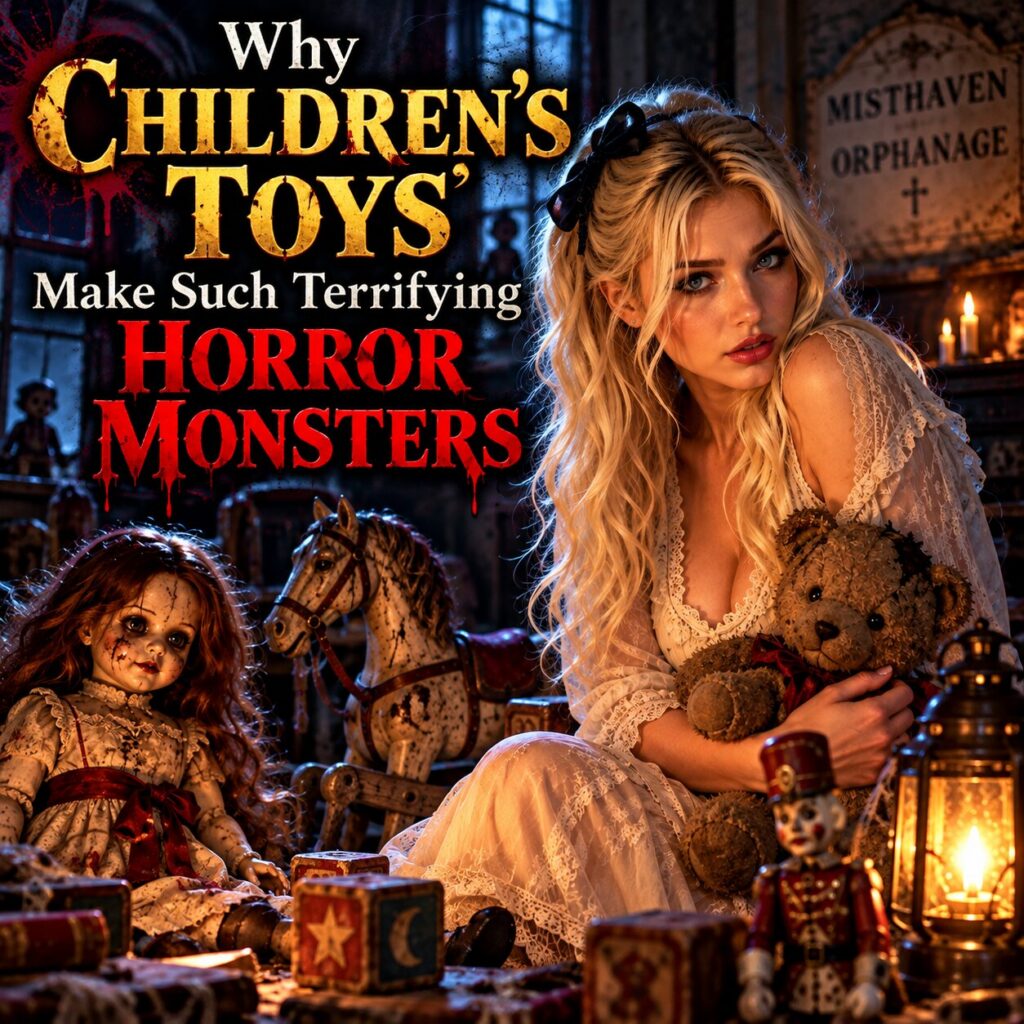
Childhood toys are supposed to represent comfort, innocence and imagination. A favourite teddy bear offers reassurance during a frightening night, while dolls become companions in imaginary adventures. However, horror writers have discovered that these familiar objects can become extraordinarily disturbing when their comforting qualities are twisted into something sinister. Children’s toys in horror have become a powerful storytelling device precisely because they transform something harmless into something threatening.
From haunted dolls to sinister playrooms, these objects remind us that childhood innocence can conceal some of our deepest fears. In Sacred Valley: Obversion, the eerie setting of Misthaven Orphanage and its connection to Cassandra provide an opportunity to explore this unsettling contrast.
Why Innocent Objects Become Frightening
One reason children’s toys in horror are so effective is their familiarity. Most readers remember owning a favourite toy, sleeping beside a stuffed animal or inventing elaborate stories involving dolls and action figures. These positive associations create an emotional connection before anything frightening happens.
When a toy suddenly moves without explanation, appears somewhere it should not be or seems to watch someone entering a room, that familiarity becomes unsettling. The object has violated our expectations, suggesting that something unnatural has entered an otherwise ordinary environment.
Dolls are particularly effective because they resemble human beings without behaving like them. Their fixed expressions, glassy eyes and artificial features can create an uncomfortable impression of something almost alive. This resembles the psychological concept of the uncanny valley, where humanlike objects can provoke unease when they appear close to, but not quite like, real people.
The Horror of Abandoned Childhood Spaces
A forgotten nursery, deserted school or abandoned orphanage can be frightening even before a supernatural presence appears. These environments were originally intended to protect and nurture children, making their deterioration especially disturbing.
An abandoned playroom might contain dusty furniture, faded drawings and toys scattered across the floor. Such details suggest that the children who once occupied the space are no longer there, encouraging readers to imagine what happened.
Writers can strengthen this atmosphere through several familiar elements:
- Dolls arranged in unnatural positions, seemingly watching visitors.
- Teddy bears appearing in unexpected locations.
- Music boxes playing without anyone touching them.
- Children’s laughter echoing through empty corridors.
- Toy soldiers or miniature figures moving between scenes.
Each detail creates uncertainty without immediately revealing the source of the danger. Readers begin questioning whether the objects are genuinely supernatural or whether fear is influencing the characters’ perceptions.
Cassandra and Misthaven Orphanage in Sacred Valley: Obversion
The world of Sacred Valley: Obversion provides a fitting setting for exploring the darker side of childhood imagery. Misthaven Orphanage, with its connection to Cassandra, brings the unsettling atmosphere of childhood spaces into a supernatural survival-horror narrative.
An orphanage carries powerful emotional associations. It is a place where children should find protection, companionship and stability. Introducing horror into such an environment creates a contrast between what the location represents and what readers fear might be hiding within it.
Cassandra’s connection to Misthaven gives this setting a personal dimension, while the wider world of Sacred Valley: Obversion includes disturbing interpretations of familiar childhood objects. Creatures associated with dolls, teddy bears and toy soldiers demonstrate how seemingly innocent imagery can become part of a much darker fictional world.
Rather than relying exclusively on grotesque appearances, these concepts draw their strength from recognition. Readers understand what these objects should represent, making their transformation into something frightening more effective.
Why Childhood Horror Stays With Us
Children’s toys in horror frequently leave lasting impressions because they challenge memories associated with safety. A frightening monster might disappear when a story ends, but a familiar doll sitting on a bedroom shelf can remind someone of the experience long afterwards.
The strongest examples also suggest that horror does not always require enormous creatures or elaborate supernatural spectacles. Sometimes, a small object placed in the wrong location can create more tension than a dramatic confrontation.
In Sacred Valley: Obversion, the connection between Cassandra, Misthaven Orphanage and the unsettling imagery of childhood offers another example of how horror can transform familiar experiences into something deeply uncomfortable.
Ultimately, children’s toys in horror remind us that the most frightening stories often begin with things we once trusted.