Comedy In Historical Fiction: Making The Past Funny
 Shaun M Jooste
History is often remembered through battles, royal decrees and extraordinary discoveries, yet everyday life was rarely solemn from morning until night. People made embarrassing mistakes, argued over ridiculous rules and found creative ways to laugh at their circumstances. Comedy in historical fiction brings those familiar human experiences into settings that initially seem distant from modern readers. When handled carefully, humour can make the past feel immediate without sacrificing historical credibility.
A successful historical comedy does not simply dress contemporary characters in period costumes. It builds amusing conflicts from the beliefs, restrictions and ambitions of people who genuinely belong to their era. Understanding how comedy in historical fiction works helps authors entertain readers while preserving the atmosphere that makes historical storytelling distinctive.
Why Comedy In Historical Fiction Connects With Readers

Historical novels often introduce unfamiliar customs, political systems and social hierarchies. Comedy in historical fiction gives readers an accessible way to understand those differences because embarrassment, jealousy and misplaced confidence remain recognisable across centuries. A character may live under an unfamiliar monarchy, but their determination to impress an important guest can still produce a wonderfully awkward scene.
The strongest comedy in historical fiction comes from the difference between what characters expect and what actually happens. A pompous official might insist that every guest follows a complicated seating arrangement, only to discover that nobody understands it. Readers laugh at the official’s growing frustration while learning how seriously status and ceremony were treated.
Researching Humour Within Historical Customs
Every historical period has its own expectations surrounding marriage, work, clothing, religion and public behaviour. Comedy in historical fiction finds natural opportunities for misunderstandings, especially when characters attempt to protect their reputations. An elaborate courtship ritual might become comic when two families interpret the same gesture in completely different ways.
Research makes comedy in historical fiction more convincing because it establishes which details could genuinely cause trouble. Diaries, letters, etiquette manuals and contemporary plays can reveal what people considered rude, fashionable or scandalous. Rather than inventing an absurd custom, writers can uncover authentic practices that already contain the ingredients for a funny scene.
Building Characters Whose Humour Fits Their Era
Comedy in historical fiction needs distinct personalities, not a constant supply of punchlines. A proud merchant, impatient apprentice or sharp-witted housekeeper can respond to the same event in completely different ways. Their education, responsibilities and position in society should shape both what they notice and what they dare to say aloud.
Character-driven comedy in historical fiction works particularly well when someone takes themselves too seriously. Imagine a nobleman who insists on perfect manners while repeatedly misunderstanding the simplest instructions. His flaws create the humour, while his fear of losing social standing gives the scene believable emotional stakes.
Writers exploring character-based humour can also read Why Comedy Is Hard To Write, which appears in the CEP Posts archive. Its focus on comic storytelling complements the challenge of making historical personalities entertaining without turning them into modern stand-up performers.
Using Satire To Explore Power And Society
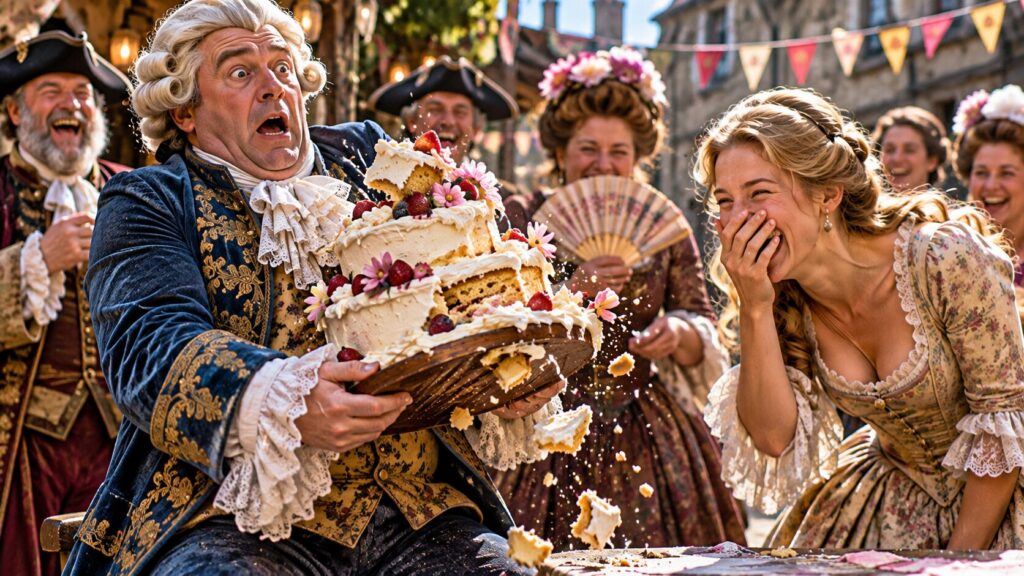
Comedy in historical fiction can use satire to expose vanity, hypocrisy and the absurdities of institutions through exaggeration and irony. Historical settings offer fertile ground for this approach because elaborate systems of rank and authority often created contradictions. An administrator might spend an entire afternoon enforcing a rule that prevents anyone from completing an urgent task.
When using comedy in historical fiction as satire, authors should understand the institution they are questioning. Mocking a corrupt official is more effective when the reader sees how his decisions affect ordinary people. The Encyclopaedia Britannica overview of satire offers useful background on this literary tradition and its use of ridicule to examine human behaviour.
Finding Funny Situations In Everyday Life
Comedy in historical fiction does not always need a king, famous explorer or important battle. Ordinary households, markets, workshops and inns were full of practical problems and competing personalities. A baker struggling with a disastrous celebration cake or a neighbour misunderstanding a message can create humour that feels both intimate and historically grounded.
Everyday comedy in historical fiction becomes especially memorable when the period changes how characters solve their problems. A missed appointment has different consequences without telephones, while a ruined outfit may be far more serious when replacement clothing is expensive. Such details transform familiar comic situations into stories that could only happen in that particular world.
Balancing Laughter With Historical Tragedy
Many historical settings involve war, disease, exploitation or persecution. Humour can exist alongside these realities, but it should not erase the suffering that gives events their significance. Writers need to consider whether a joke targets powerful institutions, human foolishness or people already experiencing hardship.
Thoughtful comedy in historical fiction often uses laughter to reveal resilience rather than dismiss tragedy. Two exhausted travellers might joke about their terrible supper while remaining genuinely frightened about the road ahead. Similar tonal choices appear in Comedy In Horror, another article recorded in the CEP Posts tab, where moments of relief can sharpen rather than undermine tension.
Avoiding Anachronisms And Forced Jokes
In comedy in historical fiction, anachronisms occur when language, objects or ideas appear in a period where they do not belong. A medieval character casually referring to a modern invention can break immersion, even when the reference earns a quick laugh. Writers should check expressions, technology and social assumptions before building a comic exchange around them.
Good comedy in historical fiction also avoids treating people from earlier centuries as unintelligent. Historical communities possessed complex knowledge, sophisticated humour and strong opinions about their world. The joke should emerge from conflicting personalities or circumstances, not from the assumption that modern readers are automatically cleverer than everyone who lived before them.
Developing Comic Scenes Through Conflict And Timing
A useful comic scene begins with a clear objective and an obstacle that makes success increasingly difficult. Perhaps a nervous guest wants to impress a wealthy patron, but every attempt at politeness creates another misunderstanding. Each complication should follow logically from the characters’ choices rather than arriving as a random gag.
Effective comedy in historical fiction also depends on timing. A delayed revelation, an overheard remark or a carefully placed interruption can change the meaning of an entire conversation. Reading dialogue aloud helps writers recognise where explanations drag, reactions arrive too early or a promising joke needs more room to develop.
Connecting Historical Humour With Modern Readers
Although readers may recognise the emotions behind a scene, authors should resist making every character share contemporary attitudes. A person challenging an unfair custom can still be shaped by the beliefs and limitations of their own time. That tension often produces richer humour than simply giving a historical protagonist a modern worldview.
For writers who enjoy exploring different approaches to storytelling, the Writing Guides category provides more CEP resources. Readers interested in imaginative fiction can also explore Windfarer as an example of how a distinctive fictional world can support character-driven storytelling.
Making Comedy In Historical Fiction Feel Authentic
The most rewarding approach begins with curiosity about how people actually lived. Research their routines, frustrations, celebrations and relationships, then identify the moments where competing desires could lead to an entertaining disaster. Let characters respond according to their circumstances, even when those responses surprise a modern audience.
Ultimately, comedy in historical fiction succeeds when the laughter reveals something meaningful about the people behind the history. A failed dinner, a pompous speech or an embarrassing misunderstanding can illuminate a society as effectively as a grand political event. The past becomes more engaging when readers recognise that its inhabitants were capable of wit, foolishness and delight, just like us.