FAQ: Which publishing route is best for my book?
 Shaun M Jooste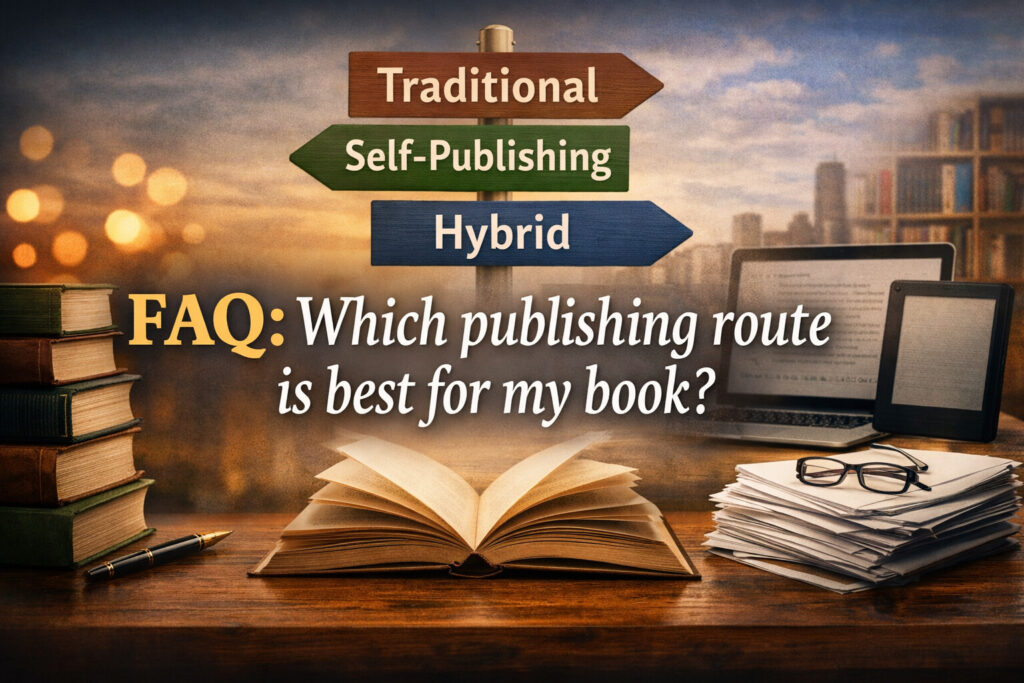
Which publishing route is best for my book?
The best publishing route for your book depends on your goals, budget, and how much control you want over the process. Traditional publishing suits authors who prefer no upfront costs and are willing to trade creative control, longer timelines, and lower royalties for potential bookstore access and publisher-led distribution. Self-publishing is ideal for authors who want full control, faster release times, and higher royalty potential, but it requires managing (or outsourcing) editing, design, and marketing.
Hybrid publishing sits between the two, offering professional publishing support while allowing authors to retain rights and creative control. It is often the best choice for authors who want a polished, professional release without navigating the entire process alone. Ultimately, the right route is the one that aligns with your expectations for ownership, involvement, speed, and long-term plans for your book.
Choosing how to publish a book is one of the most important decisions an author will make. The Publishing FAQs series is designed to answer the questions writers ask most often, clearly and honestly, without industry jargon or unrealistic promises. Each article breaks down a specific topic so authors can understand their options before committing time, money, or creative energy.
This guide focuses on one of the most common and critical questions authors face: which publishing route is best for my book? Understanding the differences between publishing routes helps you choose a path that aligns with your goals, your expectations, and the future you want for your work.
Understanding the main publishing routes

Before deciding on a publishing route, it is essential to understand that no single option is universally “better” than another. Each route serves a different type of author and a different type of book. What works well for one project may be completely wrong for another.
The three main publishing routes are traditional publishing, self-publishing, and hybrid publishing. Each route differs in terms of control, timelines, costs, royalties, and long-term flexibility. The best publishing route is the one that matches your priorities rather than external expectations.
Authors often feel pressure to choose a route based on prestige or perceived success. In reality, success looks different for every author. Some value wide distribution, others value ownership, and some want professional guidance without losing control. Clarifying these priorities is the first step toward choosing the right publishing route.
Traditional publishing: structure and reach

Traditional publishing is often seen as the most established publishing route. In this model, a publisher acquires the rights to your book, covers production costs, and manages distribution. Authors typically do not pay upfront, but they also give up a degree of creative and financial control.
One of the main advantages of traditional publishing is access to established distribution channels. This publishing route may offer opportunities for bookstore placement, industry recognition, and media exposure that are difficult to achieve independently. However, these benefits are not guaranteed and often apply to a small percentage of accepted manuscripts.
The trade-offs of this publishing route include long timelines, limited input on cover design and edits, and lower royalty percentages. Authors must also navigate a competitive submission process, often involving agents, and accept that rejection is common even for strong manuscripts.
Self-publishing: control and speed

Self-publishing gives authors full ownership and control over their work. This publishing route allows you to decide everything, from editing and cover design to pricing and marketing strategy. It also offers faster publication timelines and higher royalty potential per sale.
The flexibility of this publishing route makes it appealing to authors who want to move quickly or publish niche content. Self-publishing is especially effective for authors who enjoy managing their own projects or who want to build a direct relationship with their audience.
However, self-publishing also places all responsibility on the author. Quality control, upfront costs, and marketing efforts are entirely your responsibility unless you outsource them. Without professional support, this publishing route can feel overwhelming for first-time authors.
Hybrid publishing: balance and support

Hybrid publishing combines elements of both traditional and self-publishing. In this publishing route, authors typically invest in professional services while retaining creative control and rights to their work. The publisher provides structured support without taking ownership of the book.
This publishing route suits authors who want a professionally produced book but do not want to manage every step alone. Hybrid publishing can offer a guided process, experienced teams, and transparent timelines while still allowing authors to make final decisions.
The key to choosing this publishing route is understanding exactly what services are included and how rights and royalties are handled. A reputable hybrid model should prioritise transparency, author ownership, and long-term flexibility rather than restrictive contracts.
Choosing the right publishing route for your goals

The best publishing route depends on what you want to achieve with your book. If your priority is broad industry reach and you are comfortable with less control, traditional publishing may be suitable. If ownership, speed, and independence matter most, self-publishing may be the better option.
Authors who want professional support without giving up control often find hybrid publishing to be the most practical publishing route. This approach allows you to focus on writing while still benefiting from expert guidance and production quality.
There is no wrong choice, only informed or uninformed ones. Taking the time to understand each publishing route ensures you choose a path that supports both your book and your long-term author journey.
Making an informed publishing decision
Choosing a publishing route should never be rushed. Each option comes with responsibilities, benefits, and limitations that affect not only one book but your future projects as well. Understanding these differences helps you avoid disappointment and unexpected restrictions.
A clear understanding of your goals, budget, and level of involvement will point you toward the publishing route that best fits your needs. As this Publishing FAQs series continues, each article will explore another key question to help you navigate the publishing process with confidence and clarity.
If you’re currently considering a publishing route, check out our book publishing services to see what we offer.