Why Contemporary Fiction Thrives Across Books, Games, and Movies
 Shaun M Jooste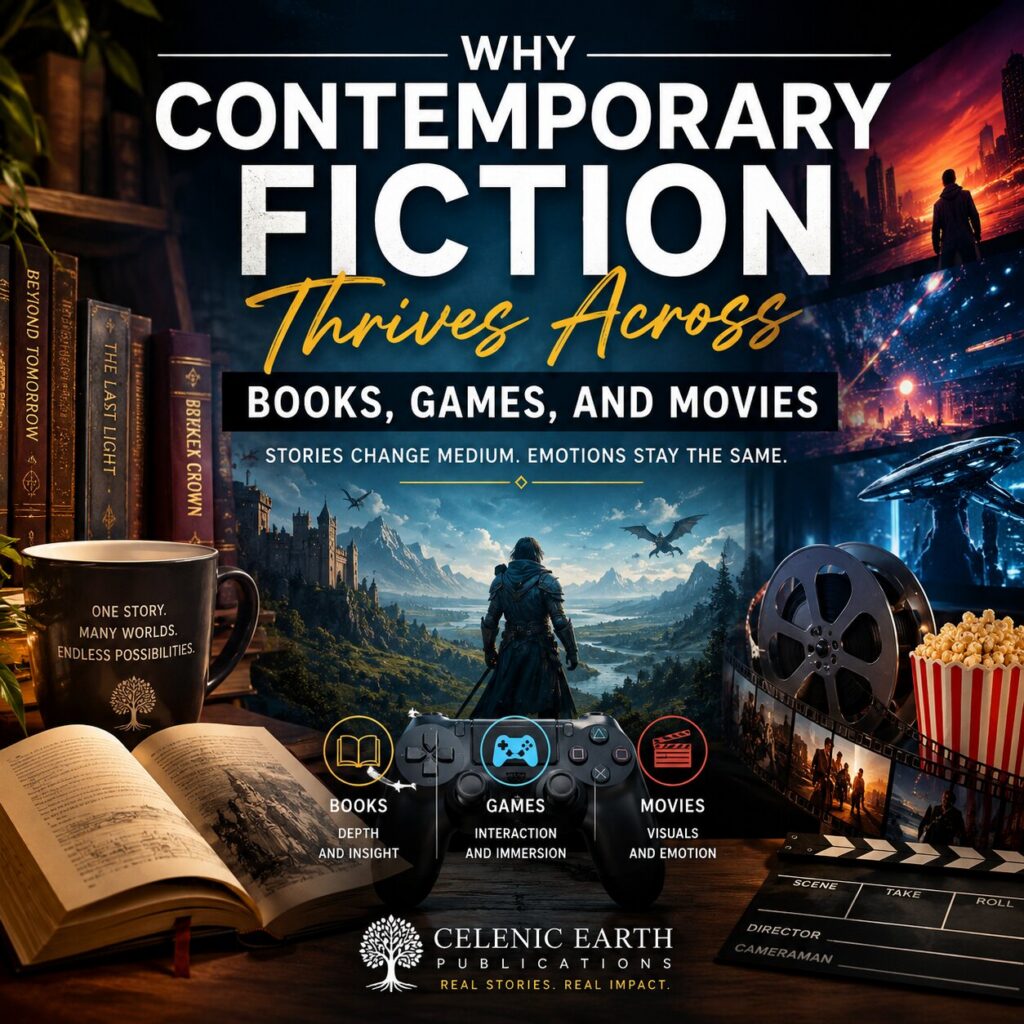
Contemporary fiction has evolved far beyond the printed page. While novels remain at the heart of storytelling, today’s audiences experience compelling narratives through books, video games, films, television series, and even interactive media. Each format offers a different way to engage with characters, worlds, and emotions, yet they all rely on the same foundation: a well-crafted story.
For writers, this presents an exciting opportunity. Rather than drawing inspiration solely from literature, modern storytellers can learn from multiple creative industries. A gripping game can teach pacing and player agency. A successful film can demonstrate visual storytelling and concise dialogue. A novel can explore internal conflict with a depth that few other mediums can match. Together, these forms of entertainment continue to shape what readers and audiences expect from contemporary fiction.
The Evolution of Modern Storytelling

Storytelling has always adapted to new technologies. From oral traditions and printed books to cinema and digital entertainment, every generation discovers fresh ways to tell unforgettable stories.
Today, audiences move effortlessly between mediums. A reader may finish a fantasy novel before playing an RPG inspired by similar themes, then watch a television adaptation of another bestselling series. Rather than viewing these experiences separately, audiences appreciate how each format expands their appreciation for compelling narratives.
This interconnected landscape encourages writers to think beyond traditional publishing. Understanding how stories function across different platforms can help authors craft richer characters, stronger pacing, and more immersive worlds.
Books Continue to Set the Standard
Despite the rise of interactive entertainment, books remain one of the most powerful storytelling mediums ever created.
A novel gives readers direct access to a character’s thoughts, fears, hopes, and motivations. Authors have the freedom to develop complex themes without the constraints of running times or production budgets. Every sentence contributes to building an emotional connection between reader and story.
Many successful films and games continue to draw inspiration from literature because strong writing forms the backbone of memorable experiences. Whether creating horror, science fiction, romance, or epic fantasy, a compelling narrative always begins with engaging characters and meaningful conflict.
What Games Teach Writers

Video games have transformed from simple entertainment into sophisticated storytelling experiences.
Modern titles often feature branching narratives, morally complex decisions, environmental storytelling, and unforgettable character arcs. Players are no longer passive observers. They become active participants whose decisions shape the journey.
Even writers who never intend to create games can learn valuable lessons from interactive storytelling. Games demonstrate how to build believable worlds through exploration rather than exposition, reveal lore naturally through the environment, and maintain player engagement over dozens of hours.
Studying successful narrative-driven games encourages authors to consider pacing, consequence, and immersion from fresh perspectives.
Cinema Shows the Power of Visual Narrative
Films and television excel at communicating emotion quickly and effectively.
Every camera angle, piece of music, lighting choice, and line of dialogue serves a purpose. Because screen time is limited, scenes must move the story forward efficiently while maintaining emotional impact.
Novelists can benefit greatly from studying cinematic storytelling. Visualising scenes before writing them often results in stronger descriptions, clearer action, and dialogue that feels authentic rather than overly explanatory.
Likewise, understanding scene transitions, dramatic tension, and visual symbolism can make prose feel more dynamic and engaging.
The Boundaries Between Mediums Are Disappearing
Today’s entertainment industry frequently blends multiple storytelling formats.
Popular novels become blockbuster films or television series. Video games inspire books and comics. Original screenplays evolve into novels, while established literary worlds expand into games that allow fans to explore familiar settings in entirely new ways.
This exchange of ideas benefits both creators and audiences. Writers gain inspiration from different disciplines, while readers enjoy richer fictional universes that extend beyond a single medium.
For aspiring authors, understanding this creative ecosystem provides valuable insight into how stories resonate with modern audiences.
One Great Story Can Live Anywhere
Whether someone reads a novel, watches a film, or plays a narrative-driven game, they are ultimately seeking the same thing: an unforgettable experience.
Compelling characters, meaningful conflict, emotional stakes, and satisfying resolutions remain timeless regardless of the platform delivering them. Technology may continue to change, but the principles of great storytelling endure.
By studying books, games, and movies together, writers can strengthen their craft while discovering new techniques that elevate their own work. Contemporary fiction is no longer confined to one medium, and neither should the imagination of those who create it.
If you’re developing a contemporary novel or story inspired by today’s entertainment landscape, Celenic Earth Publications welcomes submissions from passionate writers who believe great stories deserve to be shared. Whether your inspiration comes from literature, cinema, or interactive worlds, we’re here to help bring your vision to readers.