The Art of Comedy in Science Fiction
 Shaun M Jooste
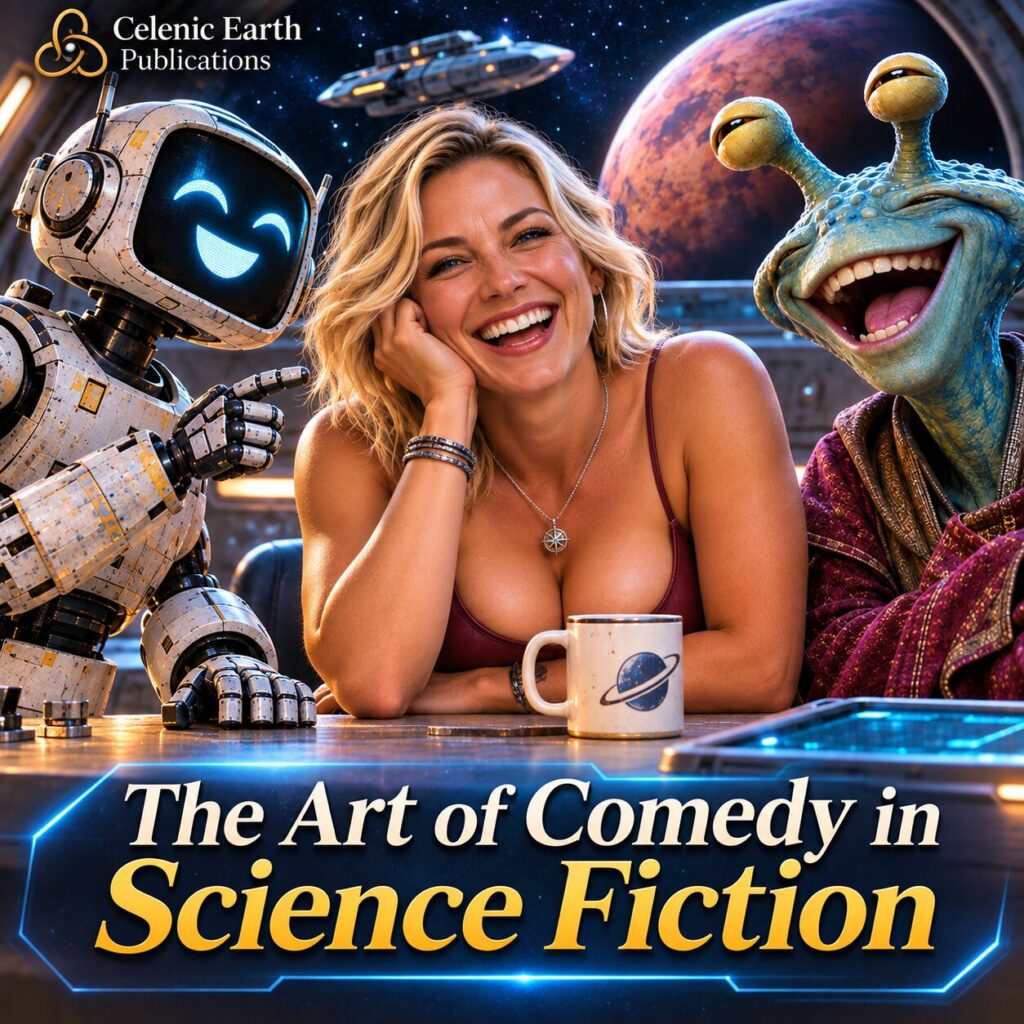
Science fiction is often associated with futuristic technology, alien civilisations, interstellar warfare and questions about humanity’s place in the universe. However, humour has always played an important role in the genre, providing entertainment while exploring serious ideas. Comedy in science fiction allows writers to challenge expectations, question technological progress and reveal the absurdities of human behaviour.
Whether a story involves malfunctioning robots, eccentric aliens or disastrous space missions, humour can make an unfamiliar universe feel surprisingly relatable.
Why Comedy Works in Science Fiction
Science fiction creates opportunities to explore situations that would be impossible in everyday life. Writers can invent extraordinary technologies, unfamiliar societies and bizarre environments before introducing characters who respond in recognisably human ways. The contrast between futuristic possibilities and ordinary human problems provides a natural foundation for comedy.
Imagine a civilisation capable of travelling between galaxies but unable to resolve a disagreement over parking regulations. Such contradictions allow writers to satirise modern society without restricting themselves to contemporary settings.
Using Technology to Create Humour
Technology frequently promises to make life easier, yet even familiar devices can create unexpected complications. Science fiction writers can exaggerate these frustrations by introducing artificial intelligence, advanced robotics and automated systems that misunderstand their intended purposes.
A household robot might interpret instructions so literally that preparing breakfast becomes a dangerous scientific experiment. Alternatively, an advanced spaceship could refuse to launch because its operating system requires an inconvenient software update.
These situations work because readers recognise the frustrations beneath the futuristic setting. The technology may be imaginary, but the comedy reflects genuine human experiences.
Alien Cultures and Comic Misunderstandings
Encounters between different civilisations offer excellent opportunities for situational humour. Alien characters may have unfamiliar customs, communication methods or social expectations that create confusion when interacting with humans.
A friendly handshake could accidentally represent a declaration of war, while an innocent compliment might be interpreted as a marriage proposal. Writers can develop these misunderstandings into entertaining scenes that also explore cultural assumptions.
However, successful comedy should give alien societies their own internal logic rather than treating unfamiliar customs as inherently ridiculous. The humour becomes more meaningful when both cultures misunderstand each other.
Satire and Social Commentary
One of science fiction’s greatest strengths is its ability to examine contemporary issues through imaginary futures. Comedy can make these observations more accessible by exaggerating social systems, political structures and technological trends.
A futuristic corporation might sell breathable air through expensive monthly subscriptions. An interplanetary government could spend decades debating the official definition of a planet while ignoring an approaching asteroid.
These scenarios entertain readers while encouraging them to recognise similar contradictions in the real world.
Balancing Humour With Serious Storytelling
Comedy does not require science fiction to abandon emotional depth or dramatic tension. Humorous moments can strengthen character relationships, provide relief after difficult scenes and make serious developments more impactful.
The important consideration is timing. A joke during an emotional confession may undermine the scene, while a humorous exchange before a dangerous mission can reveal how characters cope with fear.
Writers should also consider whether humour suits the personalities involved. A sarcastic engineer, an overly logical android and an enthusiastic alien diplomat might respond very differently to the same crisis.
Science Fiction Stories That Embrace Comedy
Several well-known works demonstrate how successfully humour can operate within speculative storytelling.
Douglas Adams’s The Hitchhiker’s Guide to the Galaxy combines absurd situations with philosophical questions about existence. Futurama uses futuristic settings to parody contemporary culture, while Red Dwarf builds much of its comedy around flawed characters surviving aboard a spacecraft.
These examples demonstrate that science fiction comedy can range from sophisticated satire to outrageous physical humour. What matters is whether the humour contributes to the fictional universe and its characters.
Creating Your Own Science Fiction Comedy
Writers interested in combining science fiction and humour should begin with a compelling speculative concept. Consider how an unusual invention, alien civilisation or futuristic social structure might complicate an otherwise ordinary situation.
Next, introduce characters whose personalities naturally generate conflict. An optimistic explorer paired with a pessimistic artificial intelligence could create entertaining dialogue without requiring constant jokes.
Finally, allow the comedy to develop from the story’s established rules. When humour emerges naturally from characters and circumstances, readers become more invested in both the laughter and the adventure.
Science fiction invites us to imagine extraordinary futures, but comedy reminds us that humanity may carry its familiar flaws into even the most advanced civilisation.