Why Baby Monsters Scare Us in Horror Stories
 Shaun M Jooste
Horror stories have a remarkable ability to transform innocent things into terrifying nightmares. Among the most disturbing creations in supernatural fiction are baby monsters, creatures that exploit our instinct to protect infants while concealing something dangerous beneath their helpless appearance. From ancient folklore to modern horror novels, these unsettling beings challenge our understanding of innocence, vulnerability and evil.
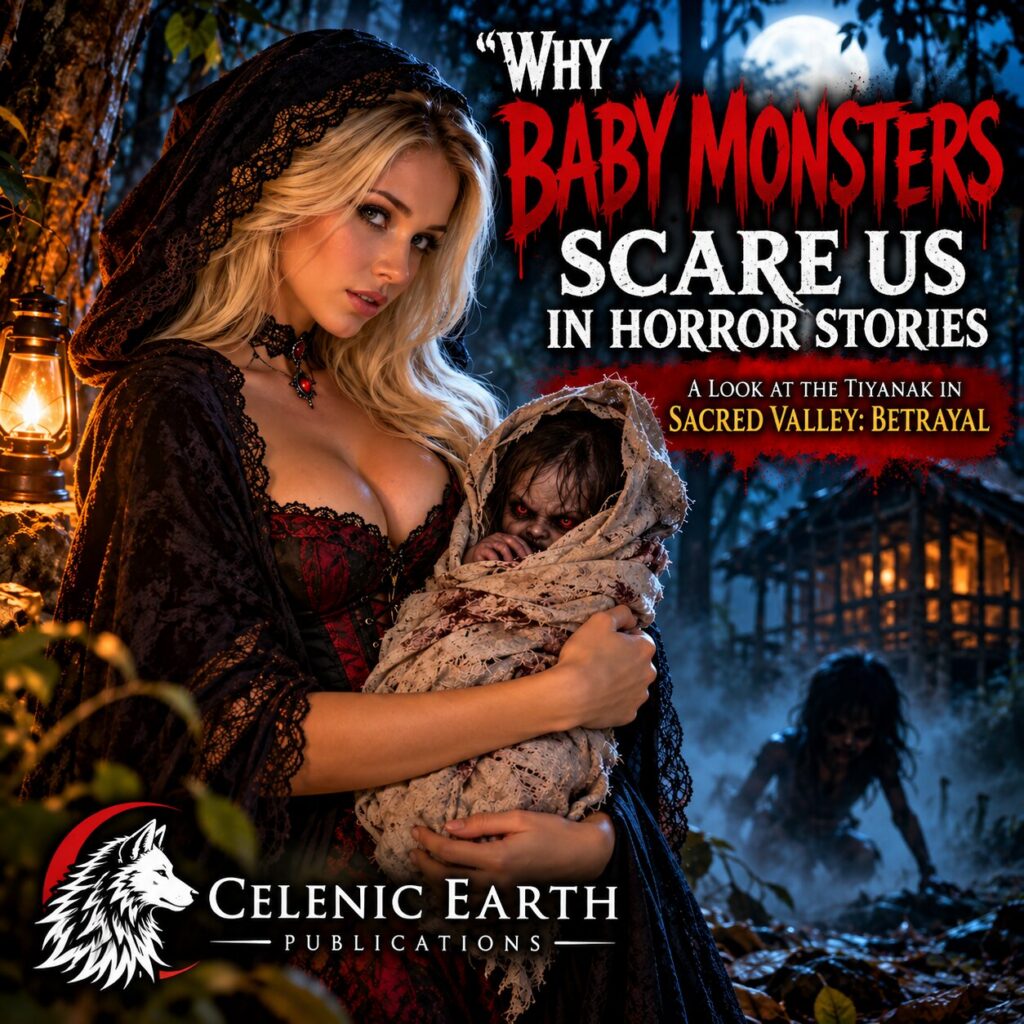
One particularly frightening example is the Tiyanak, a supernatural creature from Filipino folklore that also appears in Sacred Valley: Betrayal by Shaun M Jooste. Its disturbing nature reveals why baby monsters remain such effective instruments of psychological horror.
When Innocence Becomes a Threat
Human beings are naturally inclined to respond to the cries of a baby. Hearing an infant in distress often creates an immediate desire to investigate, comfort and protect. Horror writers exploit this instinct by presenting situations where compassion becomes a dangerous weakness.
Baby monsters are frightening because they reverse the expected relationship between protector and vulnerable child. Instead of encountering someone who needs assistance, the unsuspecting character discovers a predator. This reversal produces a powerful emotional conflict, particularly when the creature initially appears completely harmless.
The uncertainty surrounding these encounters makes them especially effective. Characters may hesitate to defend themselves because they cannot immediately accept that something resembling a baby could intend to harm them.
The Terrifying Legend of the Tiyanak

In Filipino folklore, the Tiyanak is commonly described as a supernatural creature that imitates the appearance or cries of a human infant. Legends vary between regions, but many portray it as a dangerous being that uses deception to attract unsuspecting victims.
A familiar version of the legend involves someone hearing a baby crying in an isolated location. Concerned for the abandoned child, the person approaches and attempts to help. Only then does the creature reveal its monstrous nature.
The legend draws its power from uncertainty. The victim must decide whether the crying child is genuinely helpless or something far more sinister. Ignoring the cries feels cruel, but responding could prove fatal.
The Tiyanak in Sacred Valley: Betrayal
In Sacred Valley: Betrayal, the Tiyanak forms part of a supernatural world where creatures inspired by mythology challenge the characters’ expectations of reality. Its inclusion brings an especially disturbing form of horror into a story already populated by dangerous supernatural threats.
Unlike towering monsters that immediately advertise their strength, a creature resembling an infant can exploit hesitation and emotional vulnerability. The Tiyanak represents the frightening possibility that something appearing innocent might conceal a deadly nature.
This is also what makes mythology such a valuable source of inspiration for supernatural fiction. Folklore creatures carry generations of cultural fears, allowing writers to introduce threats that operate on psychological as well as physical levels.
Why Baby Monsters Stay With Us
Baby monsters disturb us because they violate one of humanity’s strongest emotional expectations. We associate infants with new life, innocence and protection, making their transformation into threatening creatures especially unsettling.
The Tiyanak demonstrates how effectively folklore can exploit this contradiction. By combining vulnerability with danger, it creates a monster that frightens readers before its true appearance is even revealed.
For readers exploring the supernatural horrors of Sacred Valley: Betrayal, the Tiyanak offers another reminder that appearances can be dangerously misleading.