DOOM: The Dark Ages Arena Board Game Preview – Rip and Tear on the Tabletop!
 Shaun M Jooste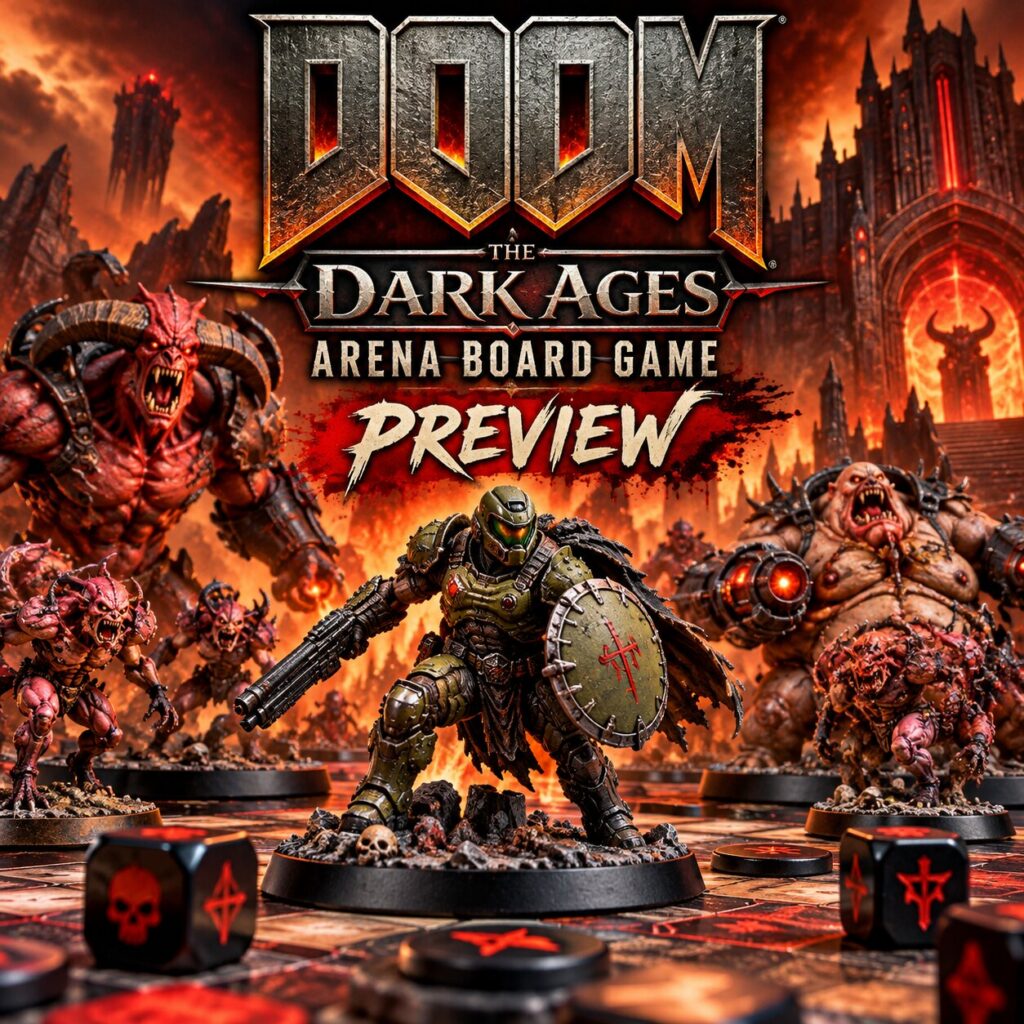
Hell has found a new battlefield, and this time, it’s coming to your tabletop! DOOM: The Dark Ages Arena Board Game brings the legendary video game franchise into the world of miniature-based tactical combat, promising brutal encounters, terrifying demons and enough firepower to make even the most hardened Slayer smile. Developed by Modiphius Entertainment, this competitive board game aims to capture the relentless action of DOOM while introducing strategic decisions that could determine who survives the next encounter.
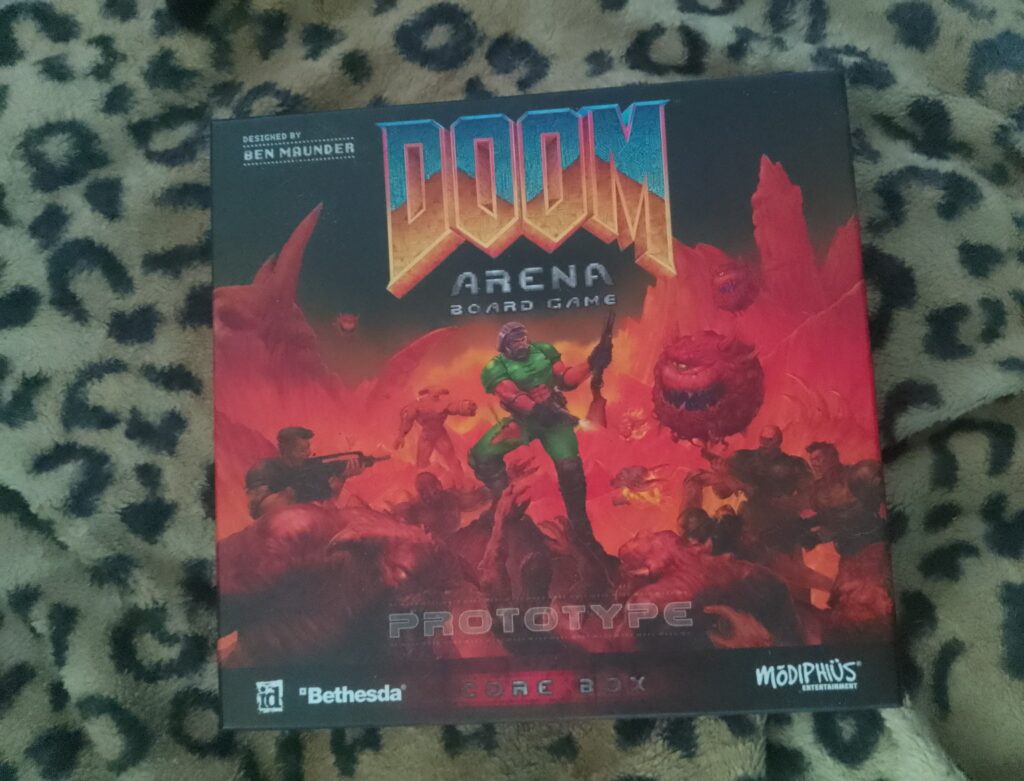
Celenic Earth Publications received a physical prototype directly from Modiphius Entertainment earlier this year, giving us an opportunity to examine the miniatures, components, artwork and proposed gameplay mechanics ahead of the finished release. While the game remains in development, our first impressions reveal an ambitious tabletop adaptation that combines the unmistakable identity of DOOM with accessible yet potentially challenging combat systems.
For this preview, we’re exploring what comes inside the prototype, how the combat mechanics are designed to work, what makes the Demonic Hordes particularly interesting, and what players can expect as development continues.
Welcome to Hell: DOOM Enters the Tabletop Arena
Anyone familiar with DOOM knows that the franchise isn’t particularly interested in peaceful negotiations. It’s about overwhelming odds, monstrous enemies, powerful weapons and a protagonist who refuses to surrender. Translating that experience into a board game presents an interesting challenge. How do you recreate the speed and aggression of a video game while allowing players enough time to consider their tactical decisions?
Modiphius approaches this challenge through a competitive two-player system. One player controls the Doom Slayer, while the other commands the Demonic Hordes. Rather than following a traditional cooperative adventure, the game places both sides against each other in a series of arena battles, with victory determined by the amount of punishment inflicted upon the opposition.
The supplied rulebook outlines a best-of-three-round structure, with each player taking six turns during a round. The Doom Slayer must make the most of his individual actions and arsenal, while the opposing player uses multiple demonic units to control the battlefield and overwhelm their enemy.
It’s an interesting interpretation of the DOOM experience. Instead of simply asking whether the Slayer can defeat everything standing in his way, the game introduces a competitive element in which both players have opportunities to claim victory.
There is also something wonderfully appropriate about controlling the demons for a change. Players accustomed to eliminating these creatures in the video games can finally discover what it’s like to command an infernal army against humanity’s most dangerous warrior.
Examining the DOOM: The Dark Ages Prototype Components
One of the most exciting parts of receiving a physical board game prototype is examining how the individual components bring the experience together. Miniatures, cards, dice and arena boards each contribute to the atmosphere, and the DOOM franchise provides plenty of inspiration for their designs.
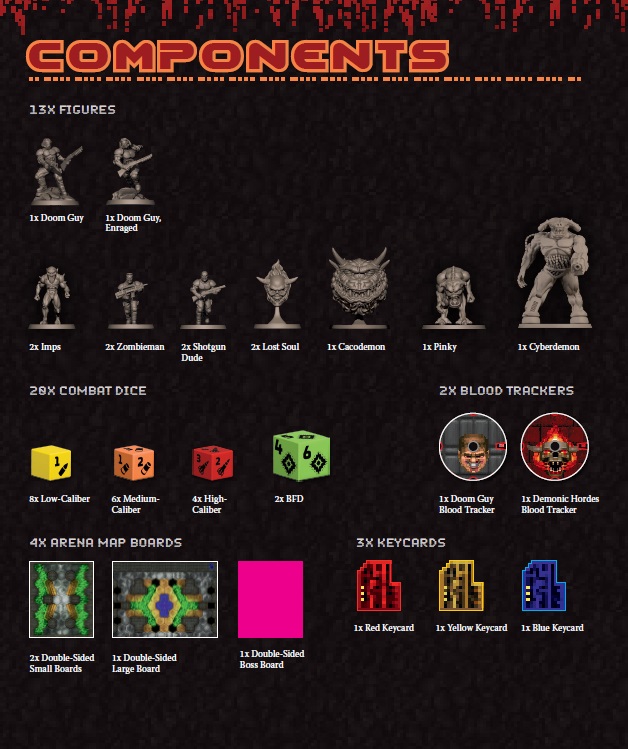
The prototype supplied to Celenic Earth Publications includes a selection of physical components representing the game’s developing design. The miniatures are particularly interesting because they transform recognisable creatures into tangible tabletop opponents. Instead of appearing briefly on a screen before being blasted apart, these enemies become pieces that players can position, command and use strategically.
The arena board introduces a hexagonal movement system, while unit cards provide information about individual combatants, including their health, movement speed, weapons and special abilities. Combat dice determine damage, and various tokens help track the action as battles unfold.
However, it’s important to distinguish the prototype from the planned retail edition. Modiphius provided documentation explaining that several components were missing or temporary because of development schedules and outstanding approvals.
According to that documentation, the completed Dark Ages edition is intended to feature:
- One double-sided small arena map and two double-sided large arena maps.
- Blood dials and a round tracker featuring DOOM: The Dark Ages designs.
- An Agaddon Hunter miniature, which was absent from the prototype pending licensor approval.
- Updated gameplay materials reflecting ongoing testing and balancing.
- Revised cards and weapon effects specific to the Dark Ages edition.
The prototype contains only one large arena map, meaning it doesn’t yet demonstrate the complete variety of environments intended for the finished game.
These differences are worth highlighting, not because they necessarily represent shortcomings, but because they illustrate how much can change between an early reviewer copy and a commercially released board game.
Rip and Tear: Understanding the Combat System
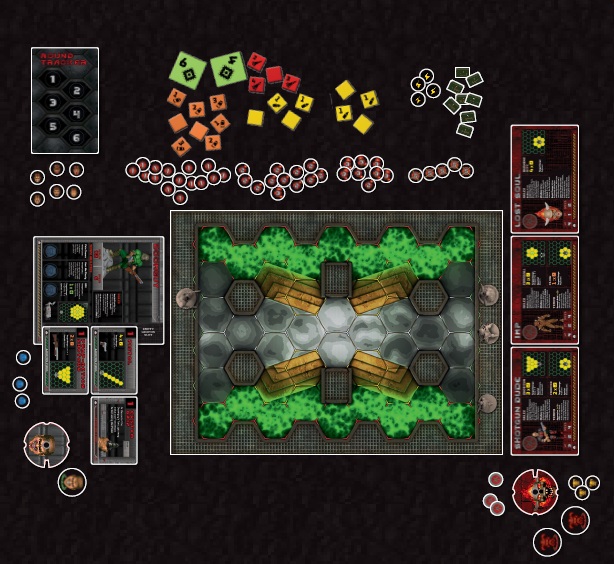
The combat mechanics are arguably the most important aspect of DOOM: The Dark Ages Arena Board Game. Without satisfying combat, even the most impressive miniatures would struggle to recreate the franchise’s appeal.
Fortunately, the proposed system contains several promising ideas.
Each unit operates according to its individual statistics, with movement taking place across hexagonal spaces. During an activation, a unit can generally perform two actions, including moving and attacking. Players can combine these actions depending on their immediate objectives, allowing for different approaches to combat.
Positioning matters because the arena contains different terrain types. Normal hexes permit unrestricted movement, while difficult terrain slows combatants. Dangerous hexes inflict damage, impassable spaces obstruct movement and line of sight, and pits can instantly eliminate unfortunate units that end their movement inside them.
This introduces an additional tactical consideration. Players aren’t simply deciding which enemy to attack; they’re also considering where to stand, how to approach opponents and whether the environment itself can become a weapon.
Attacks use different combinations of combat dice, with weapon characteristics determining their effectiveness and targeting patterns. Some weapons attack adjacent enemies, while others target individual spaces, straight lines or wider areas.
The result is a system that appears designed to reward intelligent positioning without abandoning the aggressive nature of DOOM.
Blood, Tempo and the Price of Violence
One of the more distinctive mechanics is the Blood system.
Rather than awarding victory exclusively for eliminating enemy units, players earn Blood whenever opposing units suffer damage. At the end of a round, the player who has accumulated the most Blood wins that encounter.
This creates an intriguing competitive dynamic. A player might eliminate several weaker enemies, while their opponent focuses on inflicting substantial damage against a more powerful target. Both approaches could potentially influence the outcome.
The Tempo system adds another layer. Players earn Tempo through successful damage and can spend it on special abilities, including additional movement, attacks or other advantages.
There is an appealing rhythm to this concept. Successful aggression can create opportunities for further aggression, encouraging players to remain actively engaged rather than adopting an entirely defensive strategy.
Importantly, Modiphius has confirmed a significant balancing adjustment since the supplied rulebook was prepared. All Demonic Hordes units now cost one Activation Token to activate, regardless of whether they’re classified as Fodder, Heavy or Super-Heavy.
That change could make larger demons more attractive during combat, although its full impact will depend on the final balancing of the game.
Weapons, Glory Executions and Special Abilities
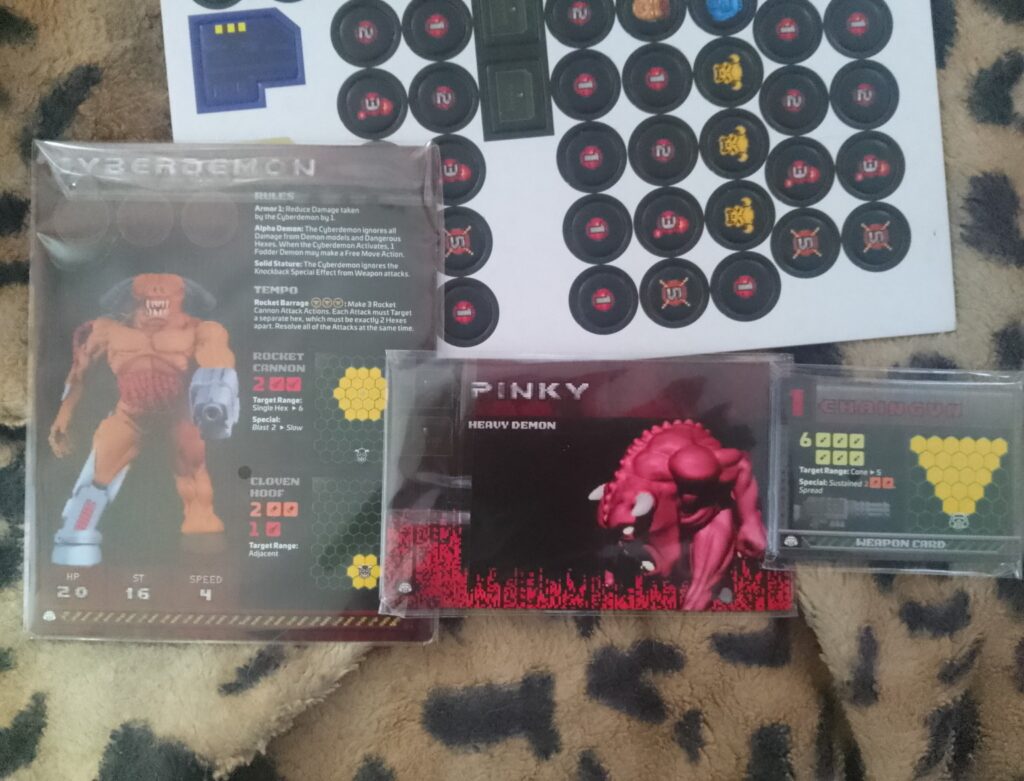
DOOM wouldn’t feel like DOOM without a memorable collection of weapons, and the Dark Ages edition introduces several mechanics that could make its combat especially entertaining.
The updated weapon effects supplied by Modiphius include Barrage, which allows combat dice to be rerolled, and Block, which lets certain weapons absorb incoming damage until they become broken.
Other effects provide additional tactical possibilities. Mobile allows movement before or after an attack, while Knockback can force enemies into different positions, potentially exposing them to environmental hazards or other combatants.
The Shield Saw’s Embed effect is particularly interesting. Under the supplied rules, it can temporarily prevent an affected enemy from activating or using abilities, although Super-Heavy Demons are immune to this effect.
Then there’s Combo, which permits the Doom Slayer to perform a free Glory Execution action following an attack. It’s precisely the kind of mechanic that helps distinguish the Dark Ages edition from a more conventional miniature combat game.
The Superheat mechanic also deserves attention. It introduces an interaction with shielded enemies, potentially allowing damage to spread to nearby demons when certain conditions are met.
These effects suggest that Modiphius is attempting to reproduce more than the appearance of DOOM. The developers appear interested in translating its combat identity into meaningful tabletop interactions.
Of course, the supplied documents don’t establish how all these mechanics will perform together in the finished product. Their effectiveness, balance and complexity will be important aspects to assess during a full gameplay review.
The Demonic Hordes: Building an Army from Hell
While the Doom Slayer naturally attracts attention, the Demonic Hordes could prove equally enjoyable to control.
The rules divide demons into different classes, including Fodder, Heavy and Super-Heavy units. These classifications influence how players expand their forces during the game, with more powerful creatures generally requiring a greater investment of Arsenal Tokens.
The progression system is particularly interesting because both sides develop differently. The Slayer gains access to additional weapons and upgrades, while the Demonic Hordes player expands their collection of monsters.
That asymmetry could become one of the game’s strongest features. Rather than controlling two armies with identical capabilities, players must learn how to exploit the particular advantages of their chosen side.
The Dark Ages prototype documentation also references creatures such as the Mancubus, Imp Stalker and Hell Knight, each with individual abilities that contribute to the overall strategy.
For example, updated rules for the Mancubus and Hell Knight include abilities that allow an Imp Stalker to respawn under specific conditions. This suggests that some demons will offer more than straightforward offensive power, potentially supporting other units or helping maintain pressure on the Slayer.
The possibility of expanding a demonic force between rounds also introduces an element of anticipation. Players must decide whether to increase their numbers or invest in stronger creatures, knowing that their choices could influence the next battle.
For fans who enjoy commanding monsters rather than fighting them, this side of the game could be a considerable attraction.
Artwork, Miniatures and the DOOM Atmosphere
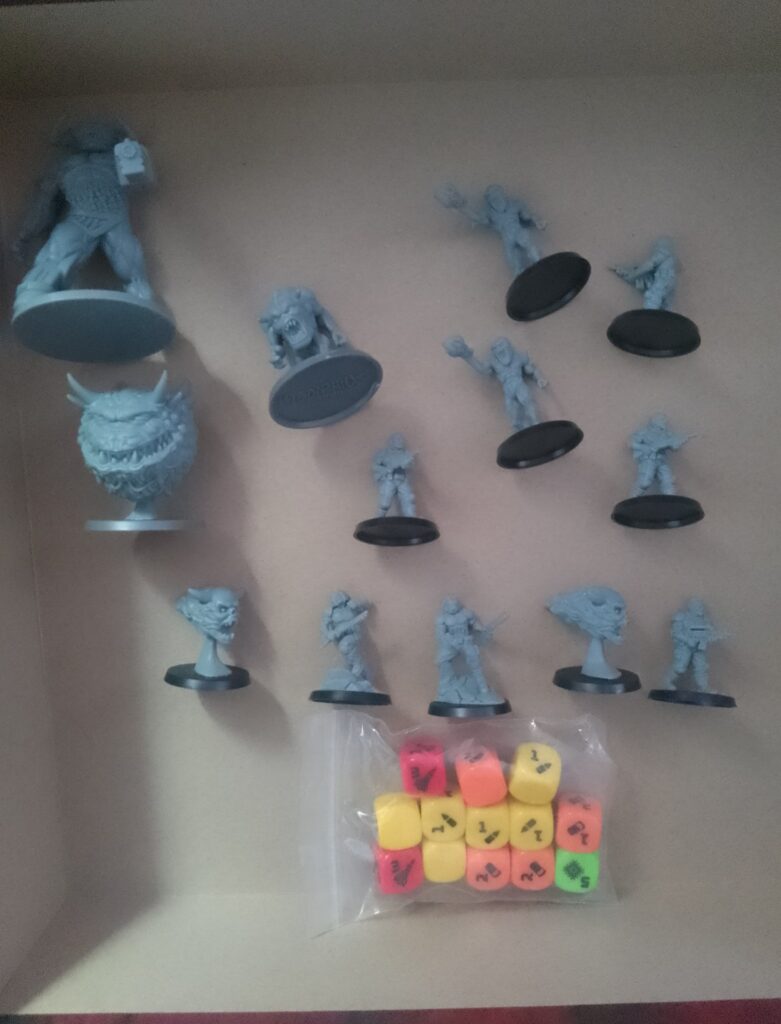
There is something special about seeing a video game universe represented through physical tabletop components. Artwork that usually appears on a screen becomes part of the cards and boards, while familiar enemies take shape as individual miniatures.
Examining the prototype reveals how much the visual presentation contributes to the intended experience. The illustrated cards, battlefield graphics and miniature designs all work towards establishing the game’s identity.
The hexagonal arena boards are especially important because they need to communicate tactical information without losing the visual atmosphere of the source material. Terrain types must remain recognisable, even when the battlefield becomes crowded with figures and tokens.
The unit cards similarly balance practical information with artwork, allowing players to identify individual combatants while checking their statistics and abilities.
For miniature enthusiasts, the models offer another potential attraction. Painting and displaying DOOM creatures could become an enjoyable part of ownership beyond the actual gameplay.
Modiphius’ Kickstarter development updates provide additional encouragement. In its August progress report, published on 1 September 2026, project manager Jamie confirmed that the team had begun receiving physical samples of numerous miniatures.
Some models still required adjustments, while others had progressed substantially. The update also noted that the development team was finishing work on the Dark Ages edition before its components moved into the graphics production queue.
This suggests that the finished product should be judged separately from the prototype’s presentation, particularly where artwork, components and miniature details remain subject to revision.
What’s Next for DOOM: The Dark Ages Arena Board Game?
One of the reasons we’re approaching this article as a preview rather than a scored review is that the project remains in development.
Modiphius has been transparent about the differences between the prototype and its intended final release, providing reviewers with a document outlining missing components, revised mechanics and corrections to existing cards.
The September Kickstarter update also indicated that development was progressing according to the project’s revised timeline, with additional miniature samples and further information about the Dark Ages edition expected in subsequent updates.
For prospective players, the most important developments to watch will be the finalisation of the rules, confirmation of the complete component list and further details about the available demons and expansions.
An updated Dark Ages-specific rulebook will be especially valuable, as the documentation supplied with the prototype currently uses the original DOOM 1993 edition as its foundation.
Until these elements are finalised, it’s difficult to make definitive judgements about the game’s overall balance, learning curve or long-term replayability.
Nevertheless, the underlying concept is promising, particularly for players who enjoy competitive miniature combat and the DOOM universe.
Discover DOOM: Arena Board Game at Modiphius
If you’re interested in bringing the relentless action of DOOM to your tabletop, you can learn more about the project through Modiphius Entertainment.
The publisher’s official announcement provides additional background on the DOOM: Arena Board Game project and its Kickstarter campaign.
Discover DOOM: Arena Board Game at Modiphius Entertainment
Affiliate Disclosure: The link above is an affiliate link. If you make a qualifying purchase through it, Celenic Earth Publications may earn a small commission at no additional cost to you. All affiliate earnings help towards the costs of running and maintaining our website, allowing us to continue publishing reviews, previews and other entertainment content.
Our First Impressions: Hell Has Potential
DOOM: The Dark Ages Arena Board Game has plenty of ingredients that could make it an exciting addition to the tabletop gaming scene. Its competitive two-player structure, asymmetrical progression, detailed miniatures and aggressive combat mechanics offer an interesting interpretation of the legendary video game franchise.
What stands out most from examining the prototype and its documentation is the effort to make combat feel distinctly DOOM-like. Blood rewards aggression, Tempo creates opportunities for additional actions, and special weapon effects introduce tactical possibilities beyond simply rolling dice to inflict damage.
The Demonic Hordes are also more than disposable opponents. Giving one player control over an expanding army of creatures creates a different perspective on the franchise and could make repeated matches particularly entertaining.
There are still questions that only the finished game and proper gameplay sessions can answer. How smoothly will the different abilities interact? Will the two sides remain balanced? And will the combat retain its excitement after numerous battles?
Those are questions we’re looking forward to exploring when the completed edition becomes available. In the meantime, I’ve enjoyed a few fun rounds with the family in anticipation of the final product.
For now, our physical examination of the prototype has left us intrigued by what Modiphius is creating. The foundation appears promising, the miniature designs provide plenty of visual appeal, and the mechanics suggest an experience built around the franchise’s unmistakable appetite for destruction.
DOOM: The Dark Ages Arena Board Game is one to keep an eye on, especially if you’ve ever wanted to command the armies of Hell or discover whether the Slayer is just as dangerous on a tabletop as he is on a screen.
Rip and tear, until it is done. Be sure to check out our other reviews and previews!
Prototype Disclosure: Celenic Earth Publications received a physical prototype of DOOM: The Dark Ages Arena Board Game directly from Modiphius Entertainment for editorial coverage. This preview is based on examination of the supplied components, development documentation and publicly shared project updates. It is not a hands-on gameplay review of the final product. The finished product may differ from the prototype described here, and no star rating has been assigned.