What is the difference between developmental, line, copy, and proofreading edits?
 Shaun M Jooste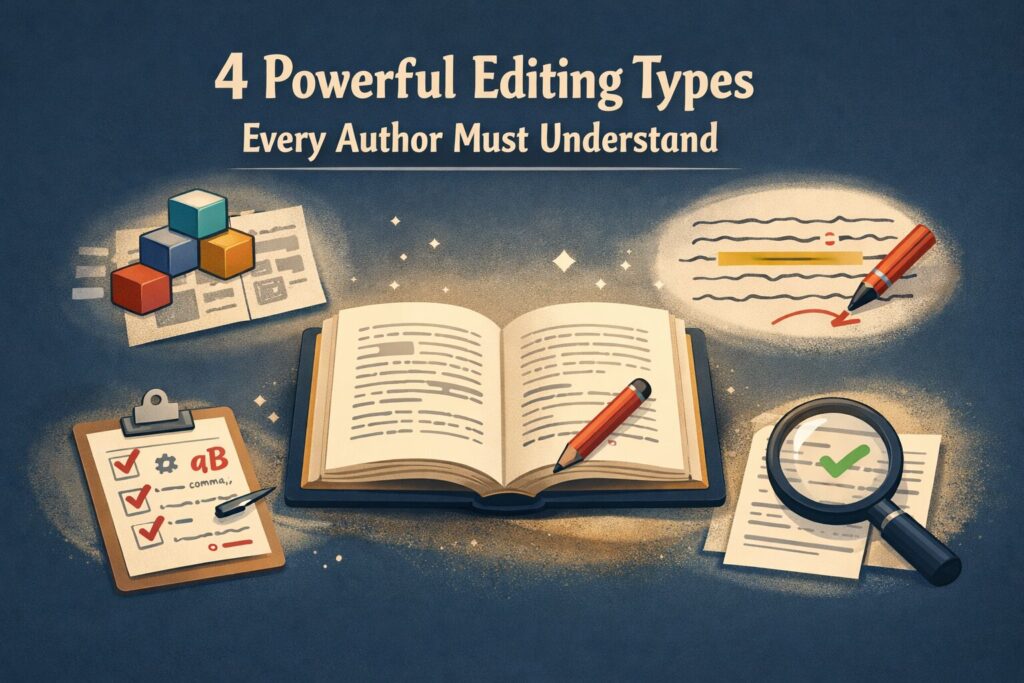
If you have ever been told your manuscript “needs editing” and wondered what kind, you are not alone. Editing is not a single step but a layered process, with each type of edit focusing on a different aspect of your book. Understanding the difference between developmental, line, copy, and proofreading edits can save you time, money, and frustration, while also ensuring your book reaches a professional standard.
For authors preparing a manuscript for submission or publication, knowing which edit you need, and when, is just as important as the writing itself. Each stage builds on the previous one, and skipping or confusing them can lead to structural issues, stylistic inconsistencies, or embarrassing errors slipping through to print.
Developmental editing

Developmental editing looks at the big picture of your manuscript. This type of edit focuses on structure, content, and overall effectiveness rather than individual sentences. A developmental editor examines plot, pacing, character development, themes, point of view, and whether the book delivers on its promise to the reader. For non-fiction, this includes argument flow, clarity of ideas, and whether the content meets the needs of the target audience.
This stage often involves detailed feedback rather than direct changes to the text. Editors may provide chapter-by-chapter notes, suggest reordering sections, identify plot holes, or recommend cutting or expanding parts of the manuscript. Developmental editing is most effective early in the writing process, before polishing language, as it can result in significant rewrites.
Line editing

Line editing focuses on how the text sounds and flows. Unlike developmental editing, which addresses structure, line editing works at the paragraph and sentence level to improve clarity, rhythm, and readability. The editor looks at word choice, sentence variety, tone consistency, and how effectively the prose conveys emotion and meaning.
This type of editing is especially valuable for fiction and narrative-driven non-fiction, where voice and style play a major role. A line editor may rephrase sentences, tighten dialogue, remove repetition, and smooth awkward transitions, all while preserving the author’s unique voice. Line editing typically happens after the manuscript’s structure is solid and no major content changes are expected.
Copy editing
Copy editing is concerned with correctness and consistency. At this stage, the editor checks grammar, spelling, punctuation, syntax, and usage, while also ensuring consistency in style, terminology, and formatting. This includes things like character name spellings, timeline accuracy, capitalisation rules, and adherence to a chosen style guide.
While copy editing may seem purely technical, it plays a critical role in professionalism. Even a compelling story can lose credibility if it is riddled with errors or inconsistencies. Copy editing usually occurs once the manuscript’s content and wording are largely final, as changes made earlier in the process can undo this work.
Proofreading

Proofreading is the final quality check before publication. It is not a rewrite or a deep edit, but a careful review to catch remaining typos, formatting issues, missing words, or layout problems that may have been introduced during typesetting or file conversion.
This stage is best done on the final formatted version of the book, whether for print or digital release. Proofreaders focus on details such as page numbers, headers, spacing, punctuation slips, and minor spelling errors. Proofreading ensures that your book is clean, polished, and ready for readers, with no obvious distractions that pull them out of the experience.
Bringing it all together
Each type of edit serves a distinct purpose, and together they form a complete editing journey. Developmental editing shapes the foundation, line editing refines the voice, copy editing ensures technical accuracy, and proofreading provides the final polish. Not every manuscript needs every stage, but understanding the differences helps authors make informed decisions about their publishing path.
If you are preparing your manuscript for publication and want guidance through these stages, take a look at the book publishing services offered by Celenic Earth Publications. From structural feedback to final proofing, the right editorial support can make all the difference in turning a manuscript into a book you are proud to share with readers.