Dungeons & Dragons Game Mechanics: A Simple Guide for New Players
 Shaun M Jooste
Tabletop role-playing games have existed for decades, yet many people still find them mysterious. When someone first hears about Dungeons & Dragons, they often imagine complicated rules, strange dice, and players speaking in fantasy voices. While the game can become deep and strategic over time, the core mechanics are actually quite simple.
Understanding Dungeons & Dragons game mechanics is easier when you realise that the system is built around storytelling and decision-making. Players create characters who explore a fictional world, while one person called the Dungeon Master describes the environment and controls the challenges. Everything that happens in the story is guided by a combination of player choices and dice rolls.
This guide explains the basic Dungeons & Dragons game mechanics in clear terms. Even if you have never played a tabletop role-playing game before, you will see how the system works and how similar mechanics appear across most TTRPG games.
The role of players and the Dungeon Master
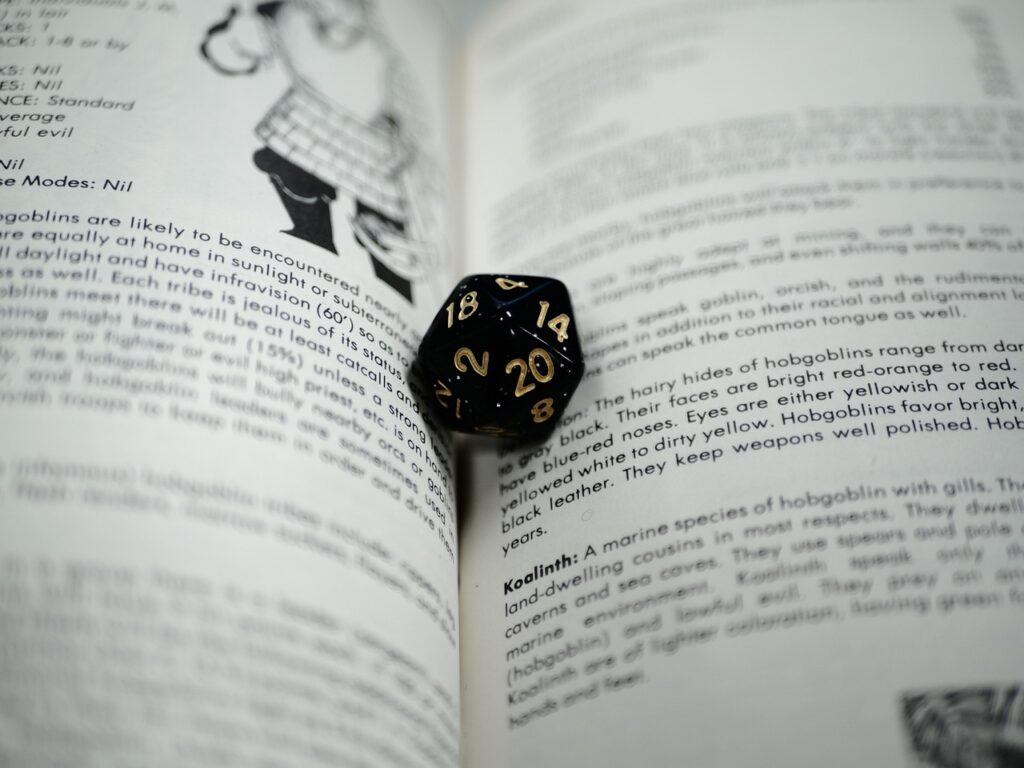
At the heart of Dungeons & Dragons is a collaborative storytelling experience. The players each control a single character, while the Dungeon Master manages the world around them. Instead of competing against each other, everyone works together to create an unfolding adventure.
The Dungeon Master acts as narrator, referee, and world builder. They describe the setting, control non-player characters, and determine how the rules apply to each situation. If the party enters a dark cave, the Dungeon Master explains what the characters see, hear, and smell before the players decide what to do next.
Players respond to these descriptions by declaring their actions. One character may search for hidden traps, another might talk to a suspicious guard, while someone else prepares a spell. These choices push the story forward and often trigger dice rolls to determine whether the actions succeed.
Because of this structure, the Dungeon Master is not an opponent. Their job is to present challenges and guide the narrative, while ensuring the rules are applied fairly. The goal is always to create an engaging story where both success and failure lead to interesting moments.

Dice rolls and the core resolution system
Most of the time, the Dungeons & Dragons game mechanics move forward through conversation. Players describe actions and the Dungeon Master responds with the results. However, when an outcome is uncertain or risky, the rules use dice to determine what happens.
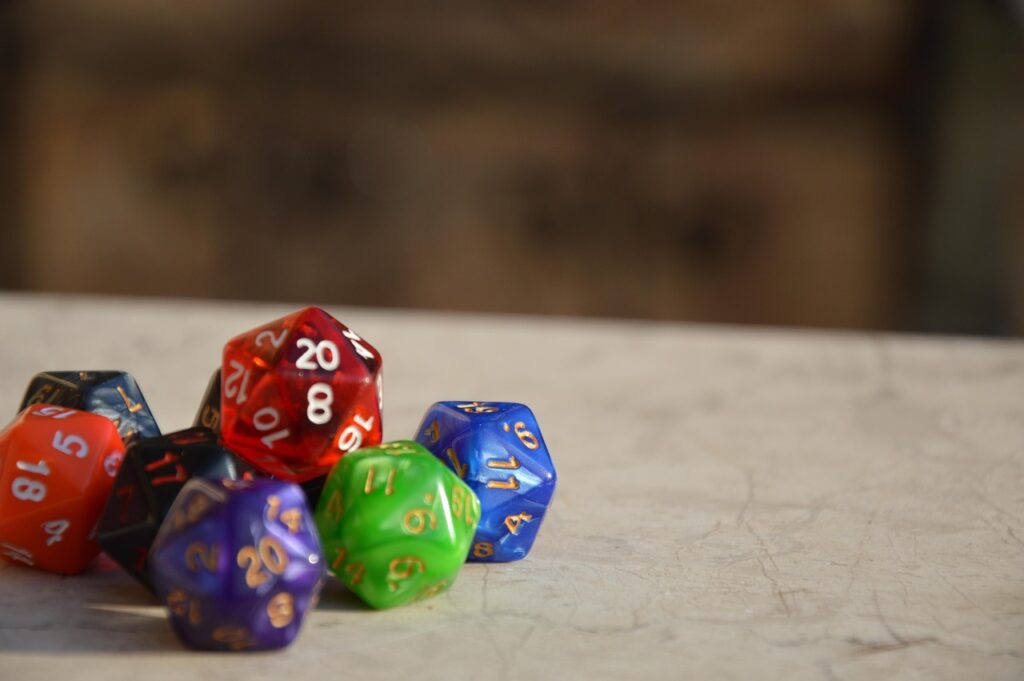
Dungeons & Dragons uses several types of polyhedral dice. The most important one is the twenty-sided die, commonly called a d20. This die drives the majority of the game’s action resolution mechanics.
When a player attempts something difficult, the Dungeon Master asks for a roll. The player rolls the d20 and adds a modifier from their character sheet. If the total meets or exceeds a target number called the Difficulty Class, the action succeeds.
This simple structure allows the game to handle almost any situation. Climbing a cliff, persuading a merchant, sneaking past guards, or striking an enemy with a sword all use the same basic principle. The die introduces uncertainty while the modifiers represent the character’s abilities.
Over time, players learn that the system rewards preparation and creativity. A strong character might excel at physical tasks, while a clever character shines during investigation or negotiation. The dice determine the outcome, but the player’s decisions still shape the story.

Character abilities and skill checks

Every character in Dungeons & Dragons is defined by a set of abilities that represent their strengths and weaknesses. These abilities influence how well the character performs in different situations.
The six core abilities are Strength, Dexterity, Constitution, Intelligence, Wisdom, and Charisma. Each one affects different aspects of gameplay. Strength governs physical power, Dexterity influences agility and reflexes, and Constitution represents endurance and resilience.
Mental abilities also play a significant role. Intelligence reflects knowledge and reasoning, Wisdom represents perception and awareness, while Charisma governs social presence and persuasion. Together these abilities create a balanced profile that defines how a character interacts with the world.
Skill checks build upon these abilities. A character might use Dexterity for stealth, Wisdom for perception, or Charisma for persuasion. When the Dungeon Master calls for a skill check, the player rolls the d20 and adds the appropriate modifiers. This system allows characters to specialise in certain areas while remaining capable in others.

Combat mechanics and turn-based actions
Combat is one of the most structured parts of Dungeons & Dragons. When a fight begins, the game shifts into a turn-based format to ensure that everyone has a fair chance to act.
At the start of combat, each participant rolls for initiative. This roll determines the order in which characters and enemies take their turns. Once the order is set, each round proceeds in sequence until the conflict ends.
During a turn, a character can usually move and perform one main action. This action might involve attacking with a weapon, casting a spell, helping an ally, or interacting with the environment. Some abilities also allow bonus actions or reactions, adding more tactical depth.
Attacks follow the same core mechanic as other actions. The player rolls a d20, adds the appropriate attack modifier, and compares the result to the enemy’s defence value called Armour Class. If the roll is high enough, the attack hits and damage is rolled using another die.
Combat in tabletop games is not only about numbers. Positioning, teamwork, and creative thinking often influence the outcome. Players might use the environment to gain advantages, negotiate with enemies, or retreat if the battle becomes too dangerous.
The typical gameplay loop in tabletop role-playing games

Although every campaign is unique, most tabletop role-playing sessions follow a similar rhythm. Understanding this loop makes it easier to see how Dungeons & Dragons game mechanics fit together.
The typical gameplay flow includes the following stages:
- The Dungeon Master describes the current scene and situation
- Players discuss their options and decide how their characters will act
- The Dungeon Master determines whether a dice roll is required
- Dice are rolled and modifiers are applied
- The result shapes the story and leads to the next scene
This cycle repeats continuously throughout a session. Exploration leads to conversations, conversations lead to challenges, and challenges often lead to discoveries or new quests. Because the system focuses on narrative progression, even failed rolls can create memorable moments.
Many modern tabletop games use variations of this same structure. While the rules may differ, the core concept of collaborative storytelling guided by dice is widely shared across the TTRPG genre.
Why these mechanics work across most TTRPG games
The reason Dungeons & Dragons game mechanics feel familiar in other tabletop systems is that the design philosophy has influenced the entire genre. Many later games adopted similar approaches to storytelling, character abilities, and dice based resolution.
For example, numerous role playing systems use a central die roll combined with character modifiers. Others replace the d20 with different dice types but keep the same idea of rolling against a target number. The goal remains the same: provide a clear method for resolving uncertain actions.
Character attributes also appear in nearly every tabletop role playing game. While the exact list of abilities may change, the concept of defining a character through strengths and weaknesses remains fundamental to the genre.
Combat systems vary widely, but many still rely on turn based structures. This approach ensures fairness and clarity during complex encounters. Players can plan their moves while the Dungeon Master manages the flow of the battle.
Because of these shared foundations, learning Dungeons & Dragons often prepares players to understand other TTRPG systems. The mechanics teach the language of tabletop gaming, making it easier to explore new worlds and rule sets later.
Why understanding Dungeons & Dragons game mechanics helps new players
For beginners, learning Dungeons & Dragons game mechanics is the key to feeling confident at the table. Once players understand Dungeons & Dragons game mechanics, the rules stop feeling intimidating and start supporting the story instead.
Many new players realise that Dungeons & Dragons game mechanics are not about memorising hundreds of rules. Instead, Dungeons & Dragons game mechanics provide a framework for deciding what happens when characters attempt risky or dramatic actions.
When groups become comfortable with Dungeons & Dragons game mechanics, gameplay flows naturally. The Dungeon Master describes the world, players respond with their decisions, and the Dungeons & Dragons game mechanics determine the outcome when uncertainty appears.
Because Dungeons & Dragons game mechanics are built around simple ideas like ability modifiers, dice rolls, and target numbers, they translate well to other tabletop systems. Learning Dungeons & Dragons game mechanics often prepares players to understand the structure of many other TTRPG games, such as Coriolis: The Third Horizon.
In practice, Dungeons & Dragons game mechanics act as the invisible engine of the adventure. While players focus on role playing and storytelling, the Dungeons & Dragons game mechanics quietly support the entire experience.
Bringing the adventure to life
Dungeons & Dragons may appear complex at first glance, but the core mechanics are built on a simple foundation. Players describe actions, the Dungeon Master sets challenges, and dice rolls determine uncertain outcomes. From this structure emerges a flexible system capable of supporting countless stories.
Once new players understand the basic mechanics, the rest of the game becomes much easier to learn. Character abilities guide decisions, skill checks resolve risky actions, and combat provides structured moments of tension. Everything ultimately serves the shared goal of collaborative storytelling.
Whether you are exploring a dungeon, negotiating with a rival kingdom, or searching ancient ruins for lost magic, the same mechanics guide the experience. That simplicity is why Dungeons & Dragons continues to inspire tabletop role playing games around the world.