How to Build a World for Dungeons & Dragons: A Beginner’s Guide to Worldbuilding
 Shaun M Jooste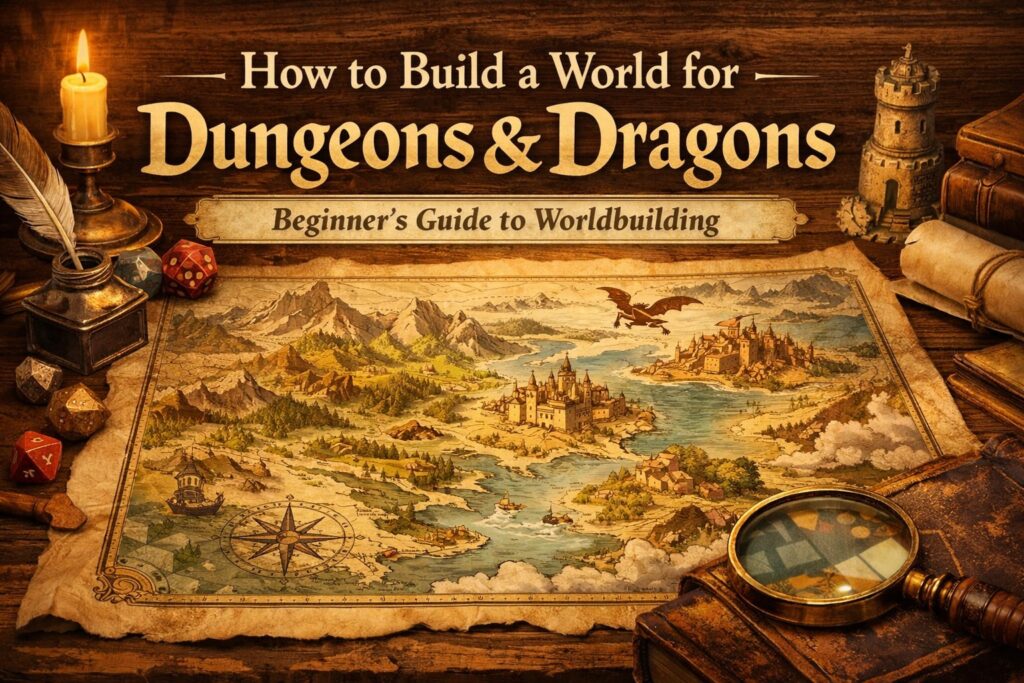
Worldbuilding is one of the most rewarding parts of running a Dungeons & Dragons campaign. A well-built world gives players a sense of place, history, and consequence, transforming a simple adventure into a living setting that evolves with their choices.
This guide breaks down worldbuilding for Dungeons & Dragons into manageable steps, helping beginners create immersive worlds without becoming overwhelmed.

What is worldbuilding in Dungeons & Dragons?
Worldbuilding is the process of creating the setting in which your campaign takes place. This includes geography, cultures, politics, history, magic, and the rules that shape how the world functions.
In Dungeons & Dragons, worldbuilding does not need to be encyclopedic. It needs to feel consistent, reactive, and believable enough for players to invest emotionally.
Start small: build the playable area first
One of the biggest worldbuilding mistakes is starting too big.
Instead of designing an entire continent:
- Create one town or city
- Add one nearby danger or mystery
- Define a handful of NPCs with motivations
Your world will naturally expand as players explore.
Tip: If the players cannot reach it in the next three sessions, you do not need to fully design it yet.
Geography: shaping the land
Geography influences everything from politics to monster encounters.
Consider:
- Mountains and natural borders
- Rivers and trade routes
- Dangerous regions (swamps, cursed forests, wastelands)
Your geography should explain why settlements exist where they do and what threats surround them.
Cultures and societies
Worldbuilding becomes memorable when cultures feel distinct.
Ask simple questions:
- What do people value most?
- Who holds power?
- What traditions or taboos exist?
You do not need dozens of races and nations. A few well-defined cultures will feel richer than many shallow ones.
Magic and rules of the world
Decide early how magic works in your setting:
- Is magic common or feared?
- Are spellcasters regulated?
- Does divine power require faith or obedience?
Clear magical rules help players understand consequences and keep the world internally consistent.
History and conflict
A believable world has scars.
Add:
- One major historical event (war, cataclysm, fallen empire)
- Ongoing tensions or unresolved conflicts
- Legends that may or may not be true
These elements create plot hooks without forcing a storyline.

Factions, gods, and power structures
Factions give your world momentum.
Examples:
- Merchant guilds
- Religious orders
- Criminal networks
- Ancient secret societies
Each faction should want something and be willing to act to get it.
Let the players help build the world
Some of the best worldbuilding happens at the table.
Encourage players to:
- Invent hometowns
- Create cultural traditions
- Add NPCs from their past
When players shape the world, they become emotionally invested in it.
Worldbuilding tools for D&D campaigns
You do not need expensive software.
Useful tools include:
- Simple notebooks or documents
- Hand-drawn or digital maps
- Random tables for names, encounters, and rumours
Consistency matters more than presentation.
Final thoughts: worldbuilding is a living process
Worldbuilding for Dungeons & Dragons is never truly finished. Your setting should evolve as players make choices, break alliances, and change the balance of power.
Start small, stay flexible, and let the world grow naturally around the story you are telling together.