How Developers Are Using AI to Create Visuals in Games
 Shaun M Jooste
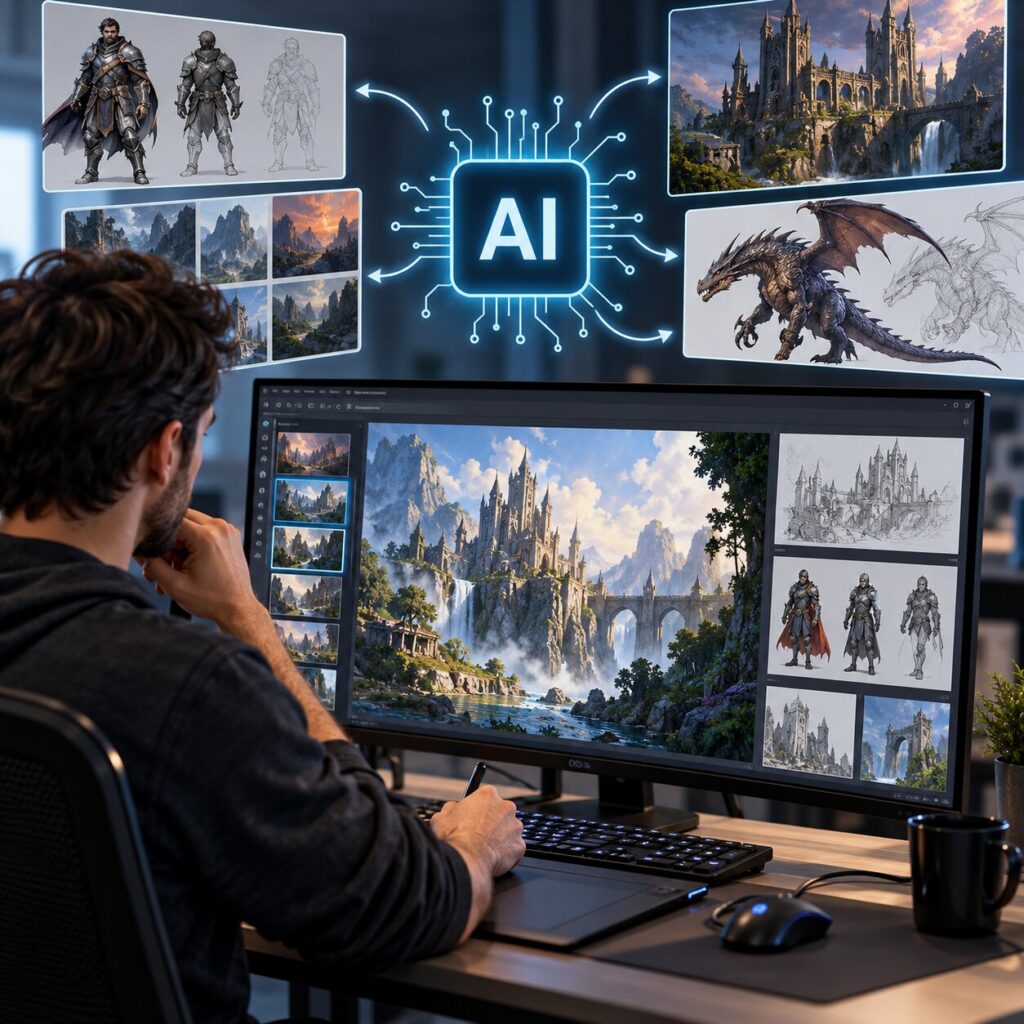
Artificial intelligence is rapidly becoming another tool in the game developer’s creative toolbox. While discussions around AI-generated artwork remain controversial, developers are experimenting with the technology to speed up visual production and explore ideas that might otherwise take considerably longer to develop.
AI as a Visual Development Tool
One useful application is during the early concept stage. Developers can use generative AI to experiment with environments, characters, creatures, architecture, colour palettes, and other visual ideas before committing resources to final artwork.
AI can also assist with elements such as:
- Early concept art and visual references
- Texture and environmental experimentation
- Background assets and variations
- Character and costume concepts
- Rapid prototyping of different artistic directions
However, generating an image is very different from producing a finished game asset. Developers still need artists, designers, animators, and technical specialists to create consistent visuals that actually function within a game.
Where Does Creativity Fit?
The interesting question isn’t simply whether AI can generate game visuals. It is how developers choose to use it.
A developer might generate dozens of concepts before selecting one as inspiration for an artist, for example. Smaller indie teams may also use AI to visualise ideas they previously lacked the budget to explore.
As AI tools continue developing, game visuals could become one of the most fascinating areas where human creativity and artificial intelligence meet.