How Science Fiction Helps Us Imagine the Future
 Shaun M Jooste
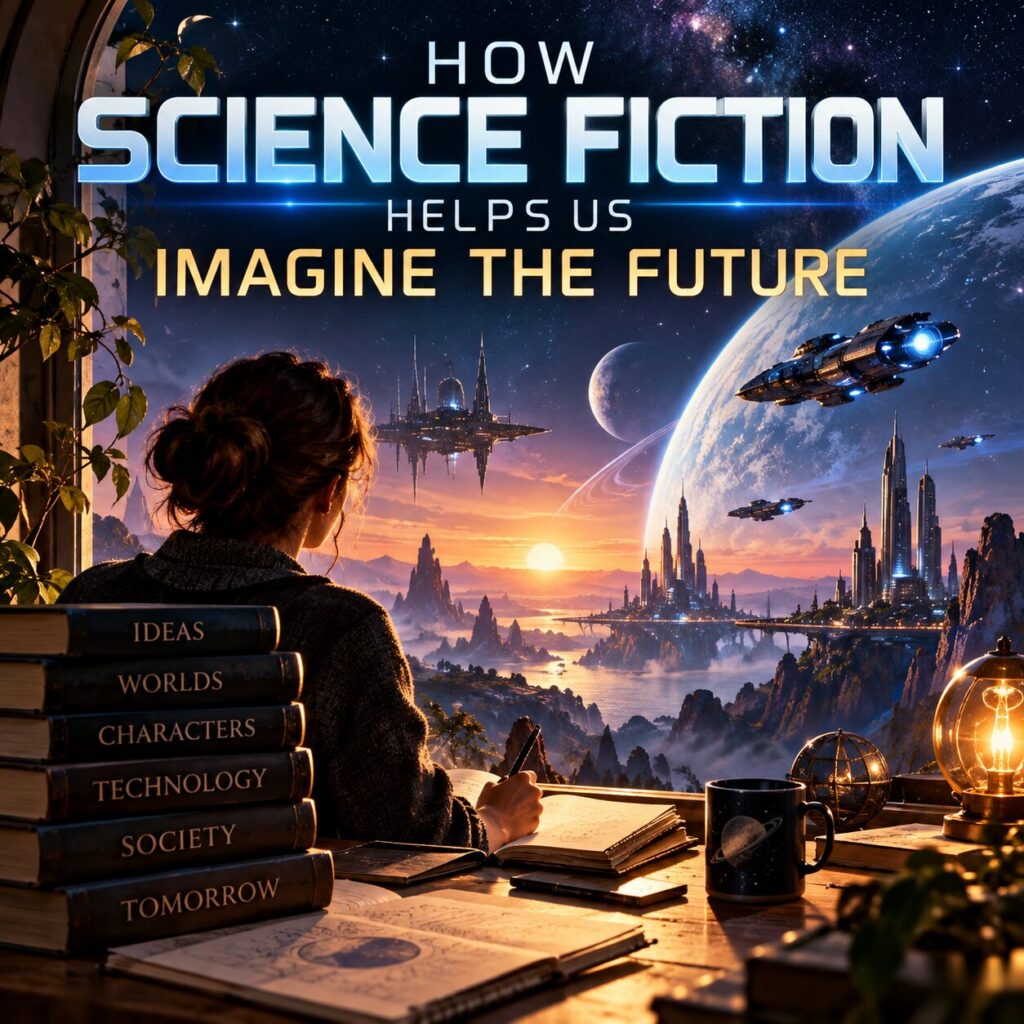
Science fiction has always been about more than spaceships, aliens and distant planets. At its best, the genre asks one deceptively simple question: what if? From there, authors can build entire futures, challenge assumptions about the present and explore possibilities that science has not yet made real.
Technology is one of the most obvious examples. Science fiction writers have imagined intelligent machines, virtual worlds, advanced robotics, space colonies and devices capable of instant communication across enormous distances. Some ideas remain firmly within fiction, while others have become surprisingly familiar parts of modern life.
However, predicting technology is not necessarily the purpose of science fiction.
The genre gives writers a laboratory in which almost anything can be tested. What happens to society when artificial intelligence performs most jobs? How would humans change after living on Mars for generations? Would discovering intelligent extraterrestrial life unite humanity or divide it further? What happens when people can alter their bodies, memories or lifespans?
None of these questions requires the author to know exactly what the future will look like. Instead, the fictional setting allows readers to consider the consequences.
Science Fiction Reflects the Present
Interestingly, stories set hundreds of years in the future often tell us plenty about the period in which they were written.
Authors can use futuristic societies to examine inequality, environmental destruction, corporate power, war, identity and technological dependence. Moving those subjects into another century or onto another planet creates enough distance for readers to examine familiar problems from an unfamiliar perspective.
That is also why science fiction can range from optimistic visions of humanity exploring the stars to dystopian worlds in which technology has magnified our worst tendencies.
There is room for both.
Modern science fiction authors have an extraordinary collection of real developments from which to draw inspiration. Artificial intelligence, reusable rockets, robotics, genetic engineering, virtual reality and increasingly sophisticated astronomical discoveries already sound like ingredients from novels written decades ago.
The challenge is deciding what might happen next.
Perhaps humanity establishes permanent settlements on the Moon and Mars. Maybe commercial spacecraft eventually travel between orbital stations as routinely as aircraft cross continents today. Artificial intelligence could become a trusted companion, an invisible infrastructure running cities or something entirely different.
Science fiction writers get to explore those possibilities before the rest of us arrive there.
And sometimes, the wildest imagined future becomes tomorrow’s ordinary reality.
Have you written a science fiction novel and are looking for a publisher? Celenic Earth Publications welcomes fiction authors to send their manuscripts for consideration. submit your sci fi book here.