Brief History of Dungeons and Dragons
 Shaun M Jooste
The history of Dungeons and Dragons is a fascinating journey through the evolution of tabletop role-playing games, from a niche hobby in the 1970s to a global pop culture phenomenon. Created by Gary Gygax and Dave Arneson, the game blended elements of miniature wargaming with storytelling, strategy, and imagination in a way the world had never seen before.
Over the decades, Dungeons and Dragons has transformed through multiple editions, inspired countless novels, video games, and films, and built a passionate community that continues to grow. Understanding its origins not only reveals how it shaped modern role-playing games but also why it remains beloved across generations.
When you’re done reading our brief history of Dungeons and Dragons, make sure you check out our Coriolis: The Third Horizon Review, a sci-fi TTRPG you’ll love!
Origins of Dungeons and Dragons (Early 1970s)
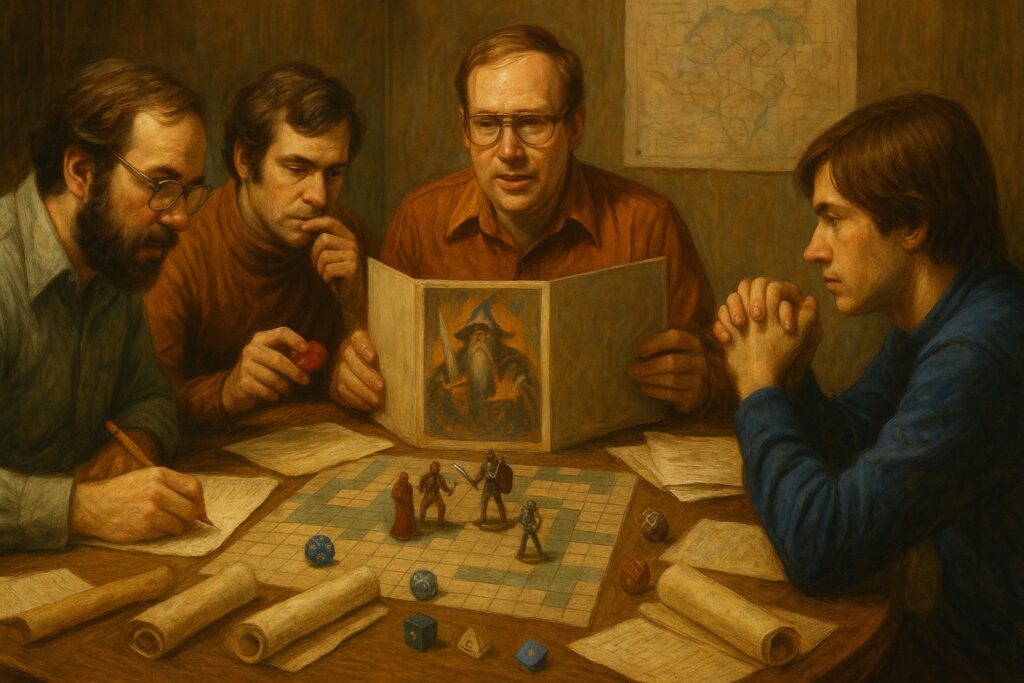
The history of Dungeons and Dragons begins in the early 1970s, when tabletop gaming was dominated by historical miniature wargames. Gary Gygax, a game designer from Lake Geneva, Wisconsin, was deeply involved in the wargaming community and co-created a set of medieval combat rules called Chainmail. Around the same time, Dave Arneson, a fellow enthusiast, was experimenting with ways to incorporate storytelling, fantasy elements, and individual character control into these battles.
When Arneson shared his ideas with Gygax, the two combined their concepts to create something revolutionary: a game where players controlled unique characters instead of entire armies. This new style of play allowed for open-ended adventures, creative problem-solving, and immersive storytelling.
In 1974, Tactical Studies Rules (TSR), the company Gygax co-founded, published the first edition of Dungeons and Dragons. The boxed set contained three small booklets explaining the rules for character creation, magic, combat, and dungeon exploration. Though the print run was small, the game quickly spread through word of mouth, setting the foundation for what would become the most influential role-playing game in history.
This early period in the history of Dungeons and Dragons not only marked the birth of a new genre (the tabletop role-playing game) but also established a culture of imagination and collaboration that would define the role-playing game history for decades to come.

Growth and Early Editions (1974–1989)
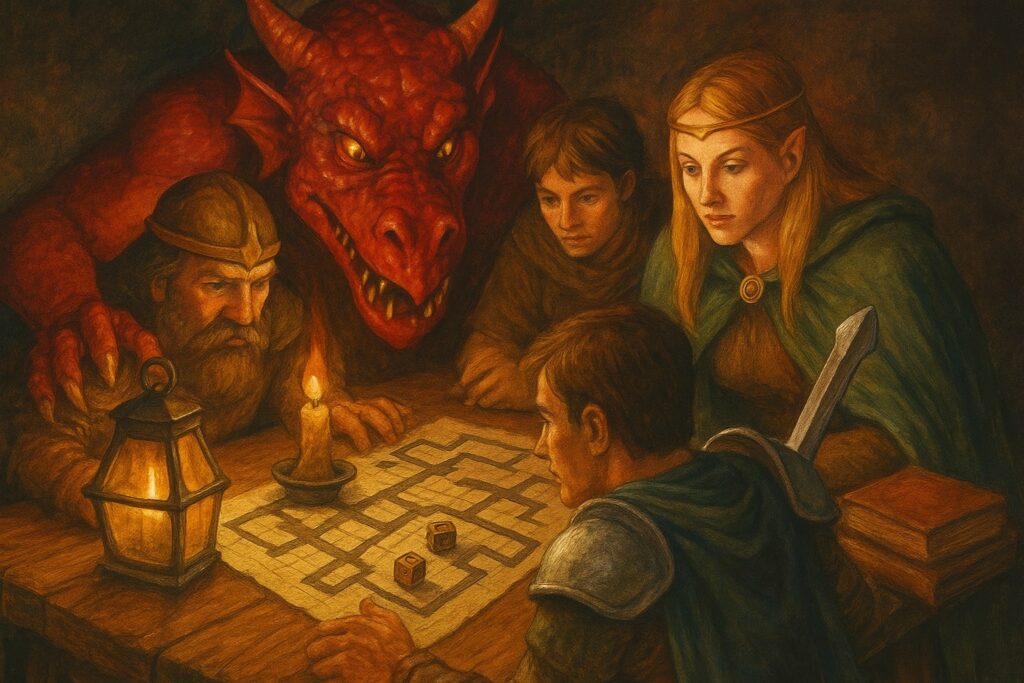
Following its modest 1974 debut, the history of Dungeons and Dragons quickly shifted from an underground curiosity to a growing phenomenon. Players were drawn to its open-ended nature, where the only limits were imagination and the rules in the booklets. As demand increased, TSR released expanded and refined versions, catering to both beginner and veteran players.
The Basic Set, first released in 1977, offered streamlined rules for newcomers, while the launch of Advanced Dungeons and Dragons (AD&D) in 1977–1979 provided a more detailed ruleset for experienced players. The AD&D 1st Edition, with iconic rulebooks like the Player’s Handbook, Monster Manual, and Dungeon Master’s Guide, became a cornerstone in the evolution of tabletop role-playing games.
The 1980s brought further expansion with the Dungeons and Dragons Basic Rules series, revised by Frank Mentzer, which introduced countless new players to the hobby. However, the game also faced controversy during this era. Media coverage, moral panic, and misconceptions about fantasy role-playing led to public debates. Ironically, this attention only increased curiosity and boosted sales.
By the release of AD&D 2nd Edition in 1989, Dungeons and Dragons had cemented itself as the leader in the role-playing game history, influencing countless other RPG systems and inspiring an entire generation of game designers, authors, and players.

Modernisation and 3rd/4th Editions (2000–2013)
The turn of the millennium marked a major turning point in the history of Dungeons and Dragons. In 1997, Wizards of the Coast, best known for Magic: The Gathering, acquired TSR and the rights to Dungeons and Dragons. This change in leadership paved the way for a significant modernisation of the game.
In 2000, Wizards of the Coast released the 3rd Edition, introducing the d20 System, a unified set of mechanics based around a single twenty-sided die roll. This innovation not only streamlined gameplay but also allowed for greater customisation and flexibility in character creation. The new system also fueled the Open Game License (OGL), enabling third-party publishers to create compatible adventures and supplements, expanding the role-playing game history in unprecedented ways.
However, the release of 4th Edition in 2008 was met with mixed reactions. While it offered clearer rules, more balanced combat, and a structure that some compared to video game mechanics, long-time fans felt it lost some of the narrative freedom and organic creativity that had defined earlier editions. Despite this, 4th Edition still attracted new players and solidified Dungeons and Dragons as an evolving brand willing to take risks.
This period in the history of Dungeons and Dragons showcased the adaptability of TTRPG, proving that even with changes in ownership, design philosophy, and player expectations, the game would continue to reinvent itself to meet the needs of a growing global audience.
5th Edition and the Revival (2014–Present)
The release of 5th Edition in 2014 sparked one of the most successful eras in the history of Dungeons and Dragons. Designed to be more accessible to newcomers while retaining the depth long-time fans loved, 5th Edition simplified mechanics, encouraged narrative-driven play, and revitalised the social aspect of tabletop gaming.
A major factor in this part of the history of Dungeons and Dragons was the explosion of actual-play content online. Shows like Critical Role, Dimension 20, and countless live-streamed campaigns introduced millions of viewers to the fun of watching others play. This exposure transformed Dungeons and Dragons from a niche pastime into a mainstream entertainment phenomenon.
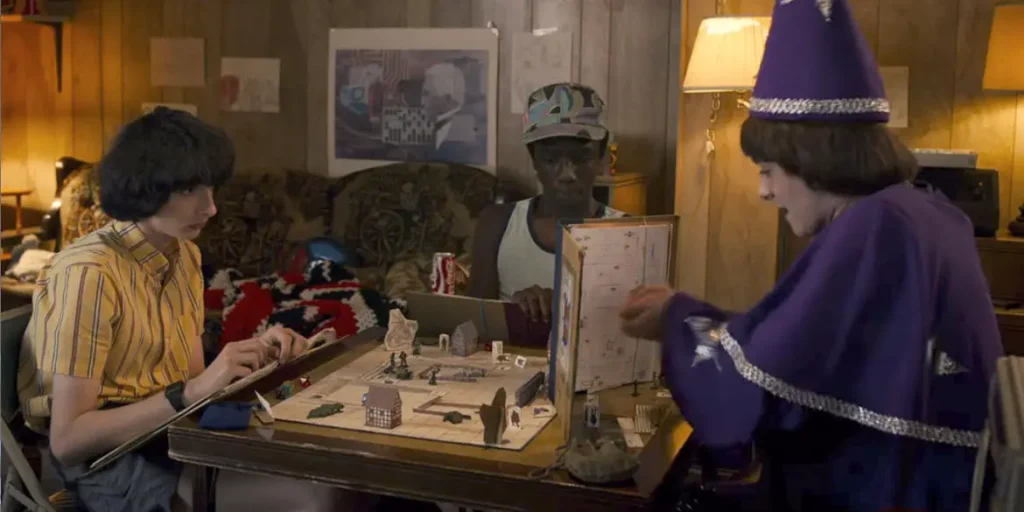
The game’s appearance in hit shows like Stranger Things further fueled public interest, making the history of Dungeons and Dragons a trending topic for new fans eager to explore where it all began.
The COVID-19 pandemic in 2020 unexpectedly accelerated the game’s growth, as players turned to virtual platforms like Roll20, D&D Beyond, and Foundry VTT to connect with friends. These tools made it easier than ever to run campaigns remotely, breaking geographical barriers and expanding the global player base.
By the late 2010s and into the 2020s, Dungeons and Dragons had firmly reestablished itself as the world’s leading tabletop role-playing game. Its influence on modern gaming, from video game RPGs to storytelling-focused board games, has never been stronger, a testament to its enduring role in role-playing game history.

Legacy and Cultural Impact
The history of Dungeons and Dragons is more than a record of rulebooks and editions; it’s the story of how one game reshaped the creative landscape of modern entertainment. Its innovative blend of storytelling, character-driven gameplay, and collaborative world-building inspired generations of writers, artists, filmmakers, and game designers.
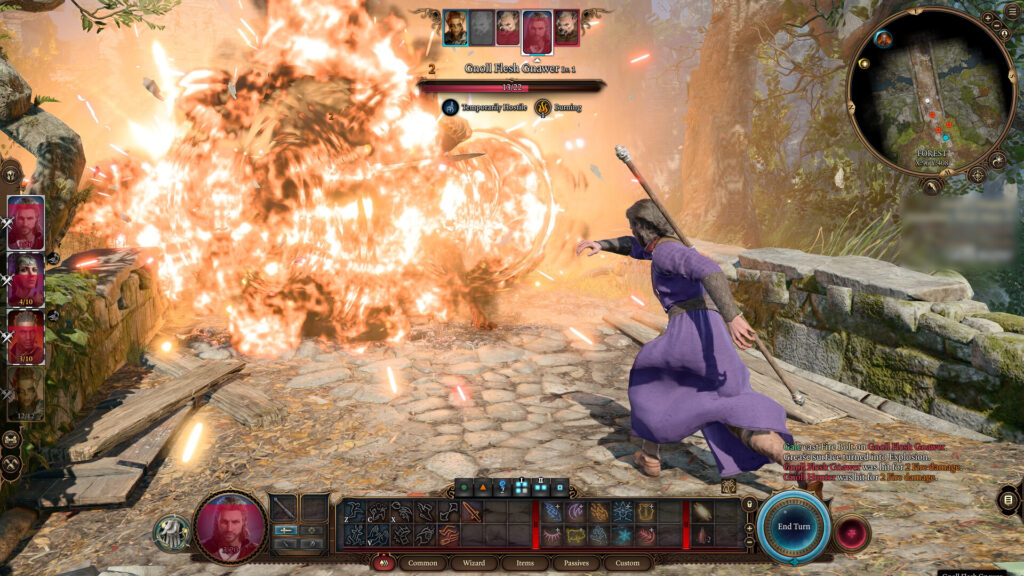
In the realm of video games, its influence is undeniable. From the Baldur’s Gate and Neverwinter Nights series to modern RPGs like The Elder Scrolls and Dragon Age, the core mechanics and storytelling principles of Dungeons and Dragons have shaped how role-playing games are designed. The game’s rich lore and fantasy settings have also provided fertile ground for novels, comics, and even films, further extending its cultural footprint.
Perhaps most importantly, Dungeons and Dragons built a community where creativity thrives. Whether around a kitchen table or across continents via online platforms, players form bonds through shared adventures. The history of Dungeons and Dragons shows how a simple idea (giving players control of their own heroic stories) evolved into a cultural movement that celebrates imagination, inclusivity, and collaboration.
Today, the legacy rolling in from the history of Dungeons and Dragons is reflected not only in its impact on pop culture but also in the countless homebrew worlds, fan creations, and adaptations that keep the role-playing game history alive for new generations.

Continuing the Legacy: The Ongoing History of Dungeons and Dragons
From its humble beginnings in the 1970s to its status as a global cultural touchstone, the history of Dungeons and Dragons is a testament to the power of imagination and collaboration. What began as an experiment by Gary Gygax and Dave Arneson has evolved into a game that spans generations, adapting to new technologies, cultural shifts, and storytelling styles while staying true to its core: shared adventure.
Each edition, from the original boxed set to the streamlined 5th Edition, reflects the changing tastes and needs of its players, ensuring that Dungeons and Dragons remains fresh without losing its soul. Its influence on other tabletop games, video games, and fantasy media continues to grow, proving that this is not just a game; it’s a storytelling tradition.
As new players discover its magic and veteran adventurers keep the torch burning, the next chapters in the history of Dungeons and Dragons are already being written around gaming tables and online sessions worldwide. The adventure, it seems, will never truly end.

Looking Ahead: CEP’s Upcoming TTRPG Experience
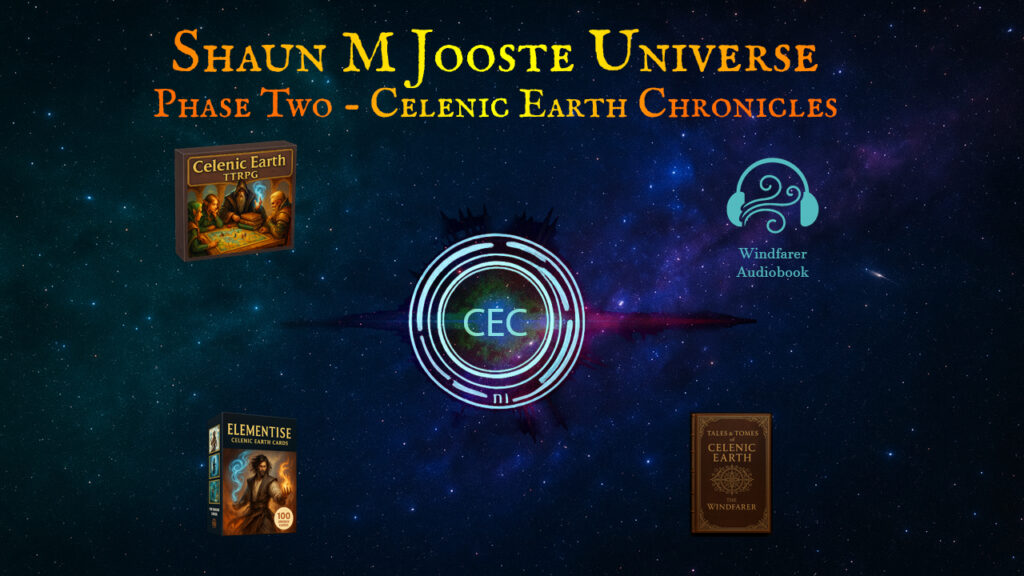
The history of Dungeons and Dragons has inspired countless creators to craft their own tabletop role-playing games, and author Shaun M Jooste is about to join those ranks. As part of Phase 2 of the Shaun M Jooste Universe (SMJU), he is developing a brand-new TTRPG based on his Celenic Earth Chronicles epic fantasy series.
In this upcoming game, players will be able to create their own unique characters and set out on adventures within the rich, detailed world established in the novels. The setting will draw directly from the lore of Windfarer, DragonRider, and Sadgi, allowing fans to explore the continents, kingdoms, and mysteries hinted at in the books.
From political intrigue to monster hunts, every session will give players the freedom to shape their own stories while staying grounded in the established canon of the series.
Much like the early days in the origins of Dungeons and Dragons, this project emphasises creative storytelling, player-driven narratives, and collaborative world-building. By blending the immersive depth of his fantasy novels with the interactive nature of a TTRPG, Shaun aims to offer both long-time readers and new fans a fresh way to experience his universe, one adventure at a time.
For more upcoming articles, please be sure to follow our Dungeons & Dragons series!