Is it still possible to be like Jesus today?
 Shaun M Jooste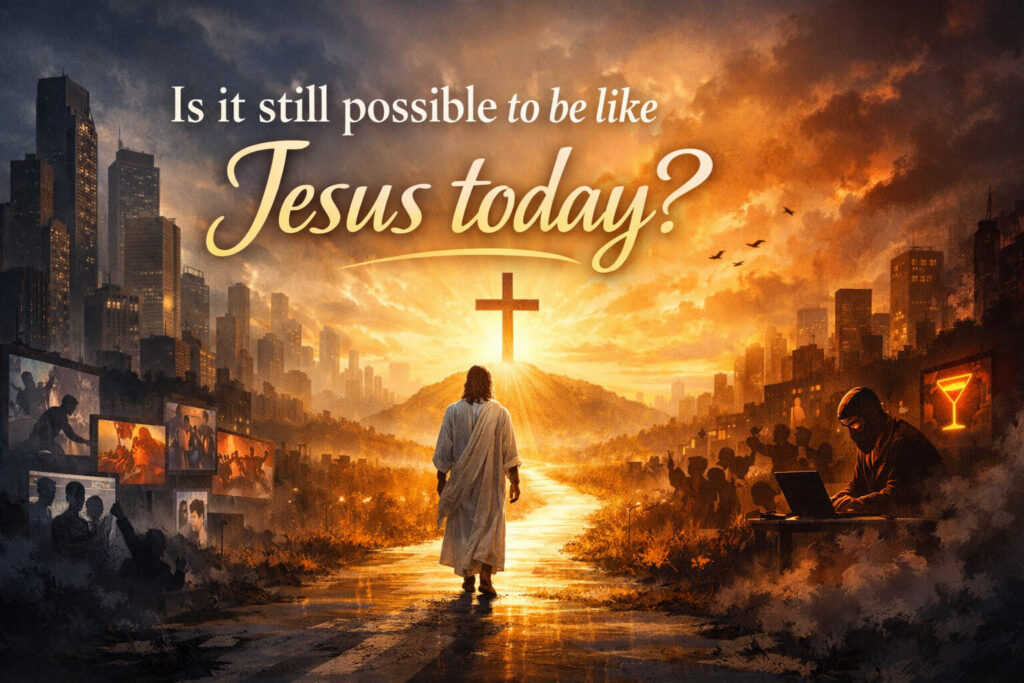
For a long time, many believers wondered how it could be possible that only a small number of people truly lived according to God’s will. Twenty years ago, it felt abstract. We wondered how the book of Revelation said only 144,000 people would still be pure and faithful before the end times. Churches were full, faith was visible, and public life still carried a sense of shared moral boundaries.
Today, that question feels sharper and more uncomfortable.
We live in a time where everything is exposed. Social media reveals not just opinions, but impulses. Anger travels faster than compassion. Envy is monetised. Revenge is rebranded as “accountability”. Entire platforms reward outrage, humiliation, lust, and division. In this landscape, the question is no longer abstract at all:
Is it still possible to be like Jesus Christ today?
The honest answer is yes. But it is no longer easy, and it was never meant to be.
A world that rewards the opposite of Christ

Modern life quietly encourages behaviours that stand in direct contrast to Christ’s teachings.
Patience is drowned out by instant reactions. Humility is mistaken for weakness. Forgiveness is seen as losing. Silence is treated as guilt.
Online, it is easier than ever to:
- Destroy reputations instead of resolving conflict
- Speak harshly without seeing the human impact
- Justify cruelty in the name of “truth”
- Reduce people to labels, politics, or tribes
This constant pressure reshapes hearts over time. Not because people are evil, but because outrage is addictive, validation is instant, and restraint goes unnoticed.
Choosing Christ-like behaviour today often means choosing what will never trend.
Being like Jesus was never about popularity

Even in His own time, Jesus was not celebrated by the powerful, the religious elite, or the self-righteous. He challenged systems, exposed hypocrisy, and sided with the broken, not the impressive.
To be like Jesus today is not to appear holy online or to win arguments with scripture. It is to live quietly against the current:
- Showing restraint when anger is justified
- Refusing revenge when it feels deserved
- Choosing integrity when shortcuts are praised
- Loving people who will never repay you
This kind of faith does not photograph well. It does not go viral. It often looks like loss in the short term.
Why it feels harder now

The difficulty is not that God has changed. It is that the world has become louder, faster, and more fragmented. We are exposed to more opinions in a single day than previous generations encountered in a lifetime. Every belief is challenged, reinterpreted, or repackaged in real time.
Even faith communities are not immune to this pressure.
Across denominations, churches are navigating cultural shifts, social expectations, and the desire to remain relevant in a changing world. In doing so, some teachings are softened, reframed, or approached with greater tolerance and flexibility. While this is often driven by compassion and inclusion, it can also leave believers quietly uncertain about where clear moral boundaries now stand.
When religious authorities reinterpret right and wrong, it places a greater responsibility on the individual. Faith is no longer something passively inherited or collectively reinforced. It must be personally examined, consciously chosen, and consistently lived.
This can be deeply challenging.
Not because guidance has disappeared, but because discernment now matters more than ever. Following Christ today requires reflection, prayer, and an inner compass that is not swayed by trends, approval, or fear of rejection. It asks believers to understand why they believe, not simply what they believe.
In this environment, living with conviction becomes harder, but also more meaningful.
The quiet discipline of becoming better
Living like Jesus today is less about grand gestures and more about daily formation. Small, unseen choices compound into character.
This is why spiritual growth often looks like habit before it looks like holiness. Choosing patience repeatedly. Choosing kindness when nobody applauds it. Choosing truth without cruelty. Choosing humility when pride would be easier.
Growth is not instant. It is practised.
That slow inner work is explored deeply in reflective spiritual writing, such as God of Mankind, Greatness of God, and even personal-development works like Habitual Ascension, which approach transformation through daily discipline rather than empty motivation.
Not because books replace faith, but because faith often needs structure to survive pressure.
Walking the narrow way in a loud world

To be like Jesus today is to accept that the path is narrower precisely because the world is louder. It means being misunderstood. It means choosing mercy over performance. It means caring more about who you are becoming than how you are perceived.
And yes, it means fewer people will choose it. Only 144,000 of us in the end…
But that has always been the case.
A life that still matters
It is possible to be like Jesus today. It simply requires courage instead of conformity, reflection instead of reaction, and faith that is lived rather than displayed.
If you are someone wrestling with these questions, or if you carry spiritual or faith-based stories that explore what it means to live with integrity in a fractured world, those stories matter. They deserve to be told, shared, and preserved.
In an age that rewards noise, choosing depth is already an act of faith.