From Manuscript to Market: Key Stages in the Book Publishing Journey
 Shaun M Jooste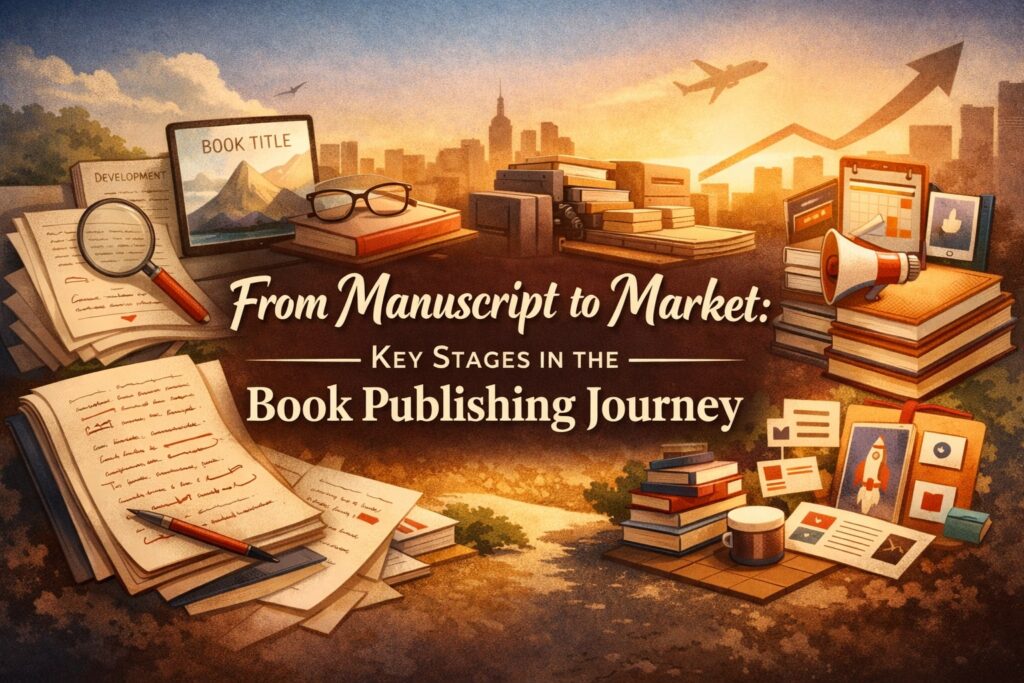
Every published book begins the same way: as a manuscript shaped by imagination, discipline, and persistence. But transforming that manuscript into a book readers can buy requires navigating a structured publishing journey. Understanding each stage, from writing to release, helps authors make informed decisions, avoid costly mistakes, and approach publishing with confidence.
This guide walks through the key stages of the book publishing journey, from the moment a manuscript is finished to when it reaches the market.
Table of Contents












Stage 1: Completing and refining the manuscript

Before publishing can begin, the manuscript itself must be complete and coherent. This stage focuses on structure, clarity, and storytelling rather than surface-level polish.
Authors often:
- Revise drafts for plot, pacing, or argument strength
- Address inconsistencies and gaps
- Receive feedback from beta readers or critique partners
A strong manuscript foundation reduces editing time later and improves the final quality of the book.
Stage 2: Professional editing
Editing is one of the most critical steps in the publishing journey. It typically happens in layers, each serving a different purpose.
Common editing stages include:
- Developmental editing to refine structure and content
- Line editing to improve flow, tone, and clarity
- Copyediting to correct grammar, spelling, and consistency
- Proofreading to catch final errors before publication
Skipping or rushing this stage often results in negative reviews and reader frustration.
Stage 3: Book design and formatting

Once the text is finalised, the manuscript becomes a book. This stage focuses on presentation and readability.
Key elements include:
- Interior layout for print and digital formats
- Font selection, spacing, and chapter styling
- Cover design that communicates genre and tone
A professionally designed book signals credibility and significantly influences purchasing decisions.
Stage 4: Publishing pathway selection
At this point, authors choose how their book will be published. Each route comes with different levels of control, responsibility, and reach.
Common publishing pathways:
- Traditional publishing through established publishers
- Independent or self-publishing platforms
- Assisted or hybrid publishing models
Understanding contracts, rights, royalties, and distribution is essential before committing to any option.
Stage 5: ISBNs, metadata, and distribution setup

Behind every published book is a technical layer that ensures it can be found and sold.
This stage includes:
- Assigning ISBNs for different formats
- Writing metadata such as book descriptions and keywords
- Setting pricing and distribution channels
Accurate metadata improves discoverability across online retailers and libraries.
Stage 6: Launch preparation and marketing
Publishing a book is not the finish line. It is the starting point of visibility and promotion.
Launch preparation often involves:
- Building anticipation through announcements or previews
- Coordinating release dates across platforms
- Planning promotional content, newsletters, or social media campaigns
A well-planned launch gives the book its strongest chance to gain early traction.
Stage 7: Post-launch growth and long-term visibility
After release, successful books continue to grow through sustained effort rather than one-time promotion.
Post-launch activities may include:
- Ongoing marketing and content updates
- Reader engagement and reviews
- Series planning or related releases
Publishing is not a single event but an ongoing process of building readership and reach.

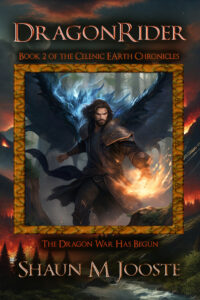





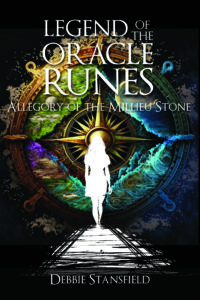







Turning a manuscript into a market-ready book
The journey from manuscript to market is a structured progression, not a mystery. Each stage plays a vital role in shaping a book that readers trust, enjoy, and recommend. Authors who understand this process are better equipped to make strategic decisions, protect their work, and maximise its potential.
Whether publishing independently or working with a publishing partner, clarity at each stage transforms publishing from an overwhelming leap into a manageable, achievable journey.